Bathroom Shelf Organization: Open Shelves That Stay Tidy
Open bathroom shelves look messy when they hold the wrong things. Learn what to display, what to contain in baskets, how to arrange each shelf and how to keep it tidy.
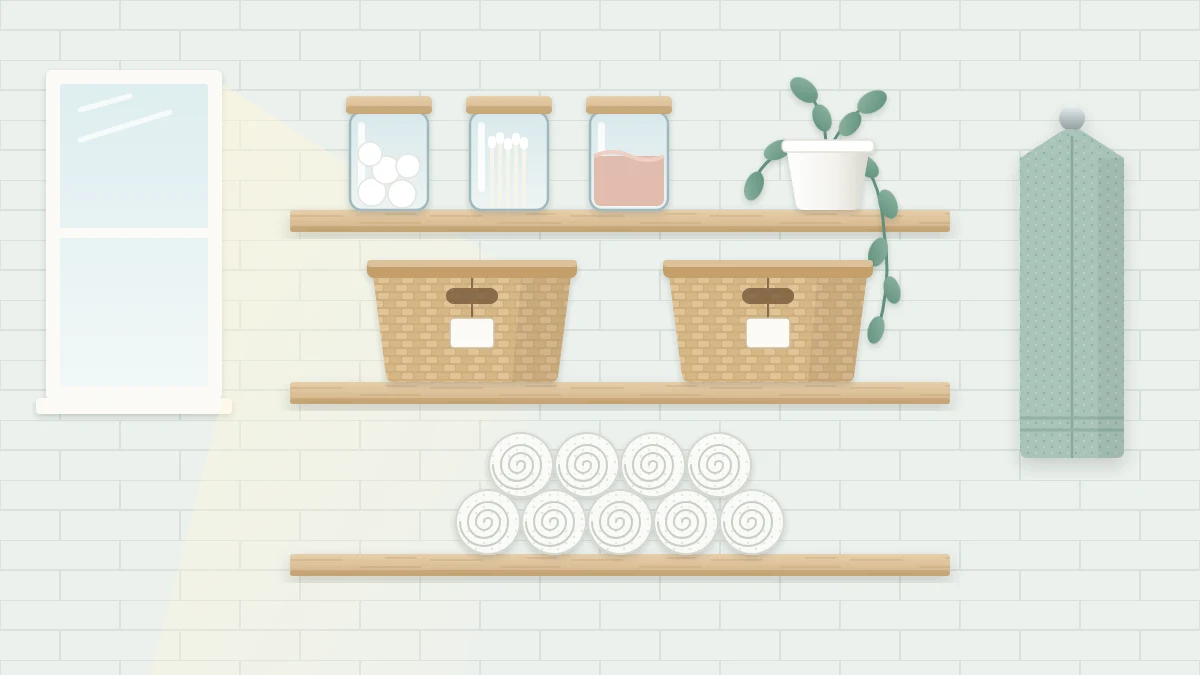
Open shelves hide nothing. A cabinet can be a jumble behind its door and the room still looks tidy, but a shelf puts every bottle, box and loose item on view. That is why bathroom shelf organization often feels like a losing effort: you straighten everything, and it still looks messy.
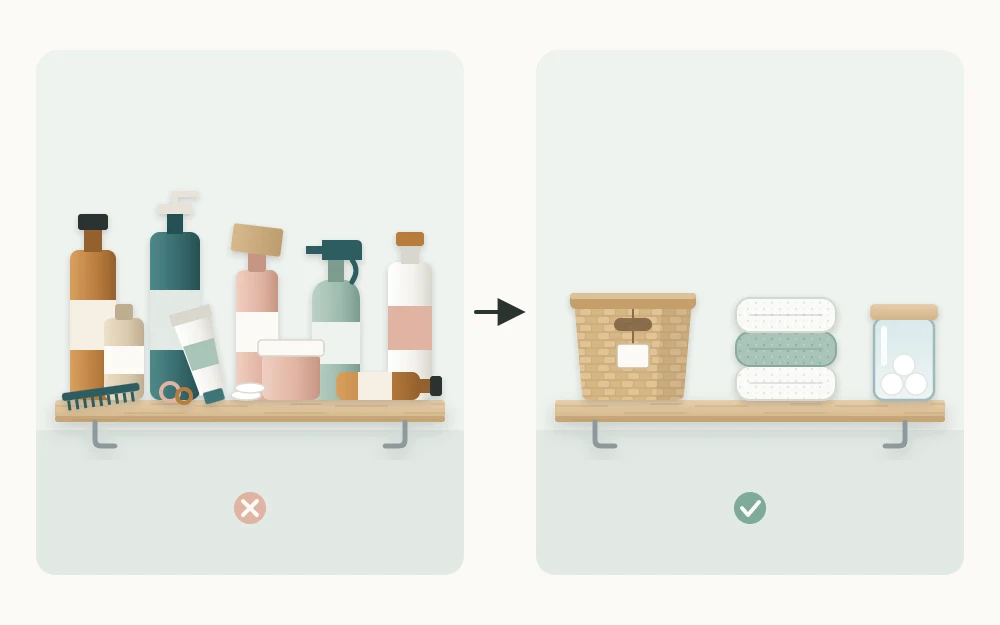
The cause is usually what is on the shelf, not how it is lined up. One rule covers most of it: display what is calm to look at, and contain what is not.
Calm items and busy items
Some things look orderly simply because they are plain and alike. Others look cluttered however neatly they stand, because each one has a different shape, color and printed packaging.
| Calm: fine on display | Busy: contain or move |
|---|---|
| Folded or rolled towels | Mixed bottles and tubes in their packaging |
| Matching jars holding cotton balls or swabs | Small loose items such as hair ties and clips |
| A plant | Opened multipacks and boxes |
| One or two baskets | Items of many different heights and colors |
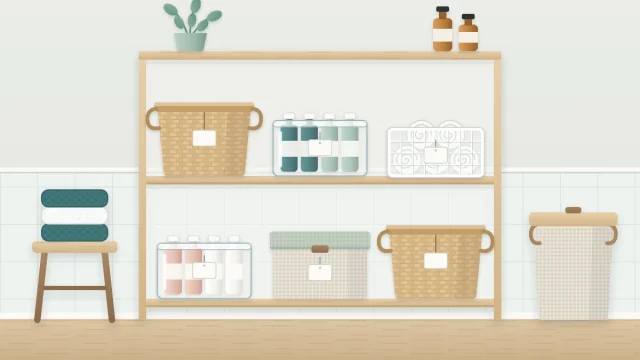
Busy items have two possible homes. They can stay on the shelf inside a basket or lidded box, or they can move to closed storage elsewhere, such as a drawer or the vanity cabinet. Products stay in their own packaging inside the basket, so their labels and storage directions stay with them.
For choosing containers that suit a shelf, including sizes and materials, see the guide to bathroom baskets and bins.
How to arrange a shelf
Once the busy items are contained, arranging what remains takes a few simple habits. None is a strict rule; treat them as starting points.
- Group in threes. Three jars, or a basket with a plant and a stack of towels, tends to look more settled than a long row of single objects.
- Repeat one material or color. All-white towels, baskets of the same weave or jars of the same glass tie separate shelves together.
- Leave about a third of each shelf empty. Clear space is what makes the rest look deliberate. A shelf filled edge to edge looks crowded even when everything on it matches.
- Vary height a little. A tall item beside a low stack looks better than everything at one level, as long as the tall item clears the shelf above.
Tip
Empty the shelf completely before arranging it. Putting back only what earns a place is much easier than deciding what to remove from a full shelf.
What goes on which level
Looks are half of it. The other half is reach, and the two usually agree.
- Low shelves: heavier and larger things, such as stacks of bath towels and big baskets. Weight low is steadier and easier to lift from.
- Hand height: what you use every day, such as hand towels, the basket of daily products or a jar of cotton swabs.
- High shelves: rarely used and light things, such as spare towels for guests, backups in a lidded box or a plant.
If a daily item lives on a high shelf, it will end up on the counter. Move its home down and move something occasional up in exchange.
Shelf types in brief
Floating shelves fix to the wall with hidden brackets. They go anywhere there is suitable wall, look light and keep the floor clear, and everything depends on correct fixing.
A ladder shelf leans against or fixes to the wall, with shelves that get shallower toward the top. It suits towels and baskets low down and small things higher up.
A freestanding unit gives the most shelf space for the least installation. It takes floor area, and a tall one is anchored to the wall as its instructions direct.
Shelves over the toilet use wall that is otherwise empty. Keep the lowest shelf high enough to leave the tank lid and the flush accessible.
A recessed niche is built into the wall, so it adds storage without projecting into the room. It is fixed in size, so choose containers to fit it.
Other ways of using wall height are in the guide to vertical bathroom storage.
Practicalities of a damp room
A bathroom shelf gets splashed and steamed in a way a bedroom shelf does not, and that affects what works on it.
Choose shelf and container materials that tolerate moisture and wipe clean, such as glass, glazed ceramic, plastic, coated metal and sealed wood. Unsealed wood and natural-fiber baskets generally suit drier spots away from the shower; follow the maker’s care instructions for each piece.
Lift things out of the splash zone. A shelf directly beside the sink or the shower opening catches water, so keep paper goods and fabric-lined baskets on higher or more distant shelves. For the products themselves, follow the storage directions on each label, since products differ.
Give towels room for air. Stacks packed tightly against one another and against the shelf above are harder to pull from and slower to air; a little space around each stack helps. Towels go on the shelf only when fully dry. Folding and rolling methods are covered in the guide to towel storage ideas.
Dusting and resetting
Open shelves collect dust, and in a bathroom dust clings. The fewer separate objects on a shelf, the quicker it is to wipe, which is one more reason for baskets and trays: you lift one container, wipe, and put it back.
A reset takes a couple of minutes. Refold the towels, return strays to their baskets, turn jars so they line up and remove anything that has drifted onto the shelf. Doing it weekly, or whenever fresh towels go up, keeps the shelf from sliding back to busy. If the same item keeps appearing loose on the shelf, it needs a container there or a home somewhere else.
Load and fixing
How much a shelf can carry depends on the shelf, its brackets, its fixings and the wall behind it, and those differ from one bathroom to the next.
Good to know
Follow the shelf’s stated load rating and its fixing instructions, and use fixings suited to your wall type. Renters should check the lease before drilling. If you are unsure about drilling into tile or what is behind a wall, ask a professional.
Stacks of towels and filled jars add up quickly, so keep the heaviest things on the lowest, sturdiest shelf, and lighten any shelf that bows or pulls away from the wall.
Frequently asked questions
Why do open bathroom shelves look cluttered even when they are tidy?
Usually because they hold many different kinds of things. Mixed packaging in assorted shapes and colors looks busy however neatly it is lined up. Put those items in a basket or lidded box, or move them to a drawer, and leave only plain, similar things such as towels and matching jars on display.
How much should I put on an open bathroom shelf?
Less than fits. As a starting point, leave about a third of each shelf clear, so the things on it have space around them. In terms of load, stay within the rating stated for the shelf and its fixings, and keep the largest and heaviest items on the lowest shelf.
What is the best way to keep open bathroom shelves dust-free?
No open shelf stays free of dust, but fewer separate objects make wiping quick. Group small things in baskets, trays or lidded boxes so you lift one container instead of ten items. A short weekly reset, done when fresh towels go up, keeps both dust and stray items under control.