Vertical Bathroom Storage: Walls, Doors and Over-the-Toilet Space
How to use the height of a bathroom when the cabinets are full: over the toilet, the back of the door, the walls and above the door, with what to store at each height and how to fix it carefully.
When the vanity cabinet and drawers are full, the usual reaction is to look for more floor space, and most bathrooms have none to give. The walls and doors are a different matter. Vertical bathroom storage uses the height of the room: the space over the toilet, the back of the door and the upper part of every wall.
Used with a little restraint, that height can take towels, backups and daily items out of the cabinets without making the room feel crowded. Start with the spot that offers the most space, then work around the room.
Over the toilet
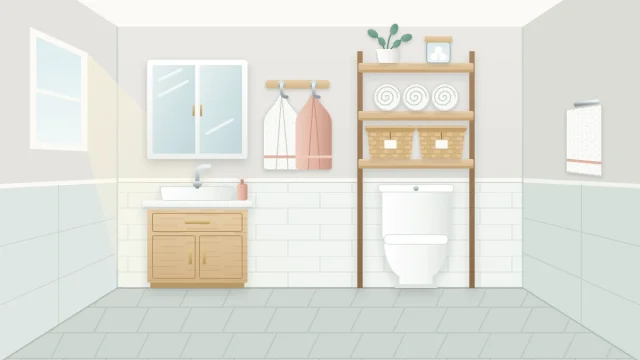
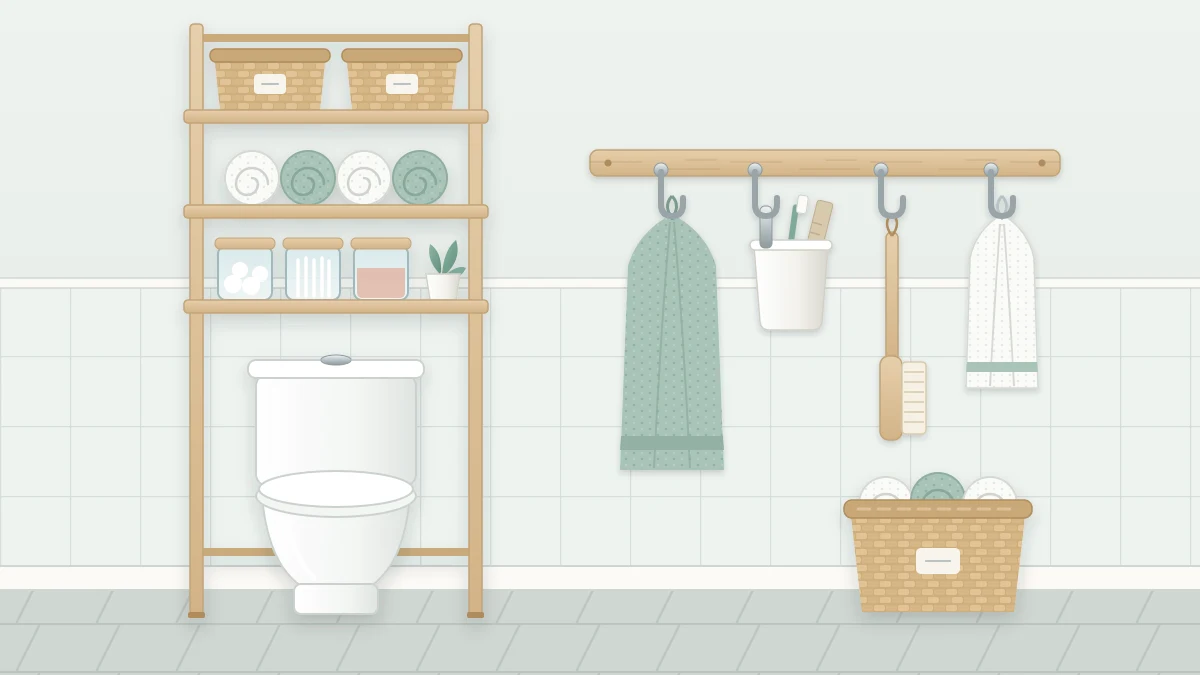
The wall above the toilet is usually the largest unused area in a bathroom. There are three common ways to use it.
- A freestanding over-the-toilet unit: legs straddle the toilet and shelves sit above the tank. It needs no drilling for the shelves themselves, though tall units are anchored to the wall as their instructions direct.
- A wall-fixed shelf unit or cabinet: it leaves the floor clear and can have doors to hide contents.
- Two or three floating shelves: the lightest look, and you choose the spacing.
Whichever you pick, keep clearance above the tank so the lid can be lifted off for repairs, and leave enough room to clean around the toilet. Keep the lowest shelf high enough that nobody bumps it. For what to put on those shelves and how to arrange it, see the guide to organizing bathroom shelves.
The back of the door
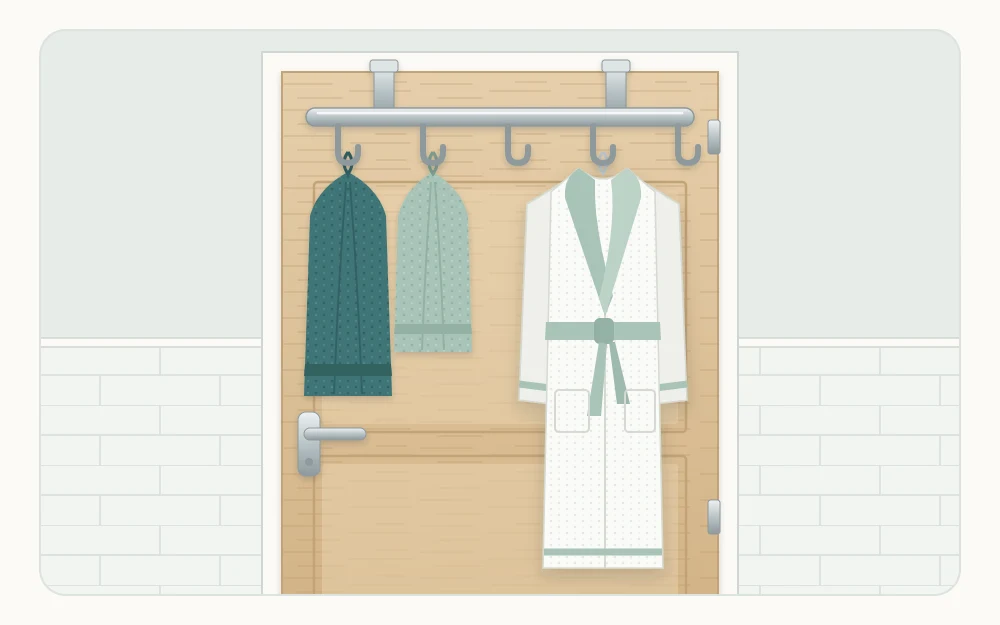
A door offers a tall, flat surface that is hidden whenever the door is open. Over-the-door hooks or a rack suit towels and robes, and need no fixings.
Before relying on one, check two things. The door must still close and latch with the hooks in place, and the hanging items must clear the frame, the wall behind the door and anything mounted there. Hung towels need room to spread out and dry, so do not overload the hooks; the guide to towel storage ideas compares hooks with bars for that job.
The walls
Any stretch of wall you can reach without leaning over something is a candidate.
- A rail with hooks and hanging cups: for brushes, combs and small daily items that would otherwise sit on the counter.
- A peg rail: a row of pegs for towels, robes and a hanging basket.
- Narrow ledges: shallow shelves beside the mirror or above the sink for a few small bottles.
- A tall slim cabinet or ladder shelf: floor-standing, but with a small footprint for the storage it gives.
Keep anything fixed beside the sink shallow, so it does not get in the way when you lean toward the mirror.
Above the door and inside cabinet doors
A single shelf above the door frame is out of the way and easy to forget, which makes it a good home for backups in lidded bins. Choose bins with handles so they can be lifted down safely, and reach them from a stable step stool.
The inside faces of cabinet doors hold more than they seem to. Shallow racks, small hooks or adhesive pockets take flat, light items such as combs or a pack of cotton swabs. Check that the door still closes fully and that nothing hits the shelves or the pipes inside.
What goes at which height
Height should follow how often you use something.
- Hand level, roughly waist to eye height: items used every day.
- Just above: things used weekly, such as spare towels.
- The top: backups and rarely used items, in lidded bins.
Keep heavy and breakable things off overhead shelves altogether. Glass jars and large full bottles belong at or below waist height, where a slip of the hand does little harm.
| Spot | What fits | Note |
|---|---|---|
| Over the toilet | Baskets, rolled towels, paper goods | Keep the tank lid accessible |
| Back of the door | Towels, robes | Door must close; items clear the frame |
| Wall rail or peg rail | Brushes, cups of small items, hand towel | Place within easy reach of the sink |
| Narrow ledge | A few small daily bottles | Keep it shallow beside the mirror |
| Above the door | Backups in lidded bins | Light items only; use a step stool |
| Inside cabinet doors | Flat, light items | Check the door closes fully |
Fixing and load
Storage on a wall is only as good as the way it is fixed, and walls differ. Tile, drywall and masonry each need their own type of fixing, and a fixing that suits one may fail in another.
- Follow the product’s instructions and its stated load rating, and count the contents as part of the load.
- Use fixings suited to your wall type. The ones supplied in the box may not match your wall.
- Anchor tall freestanding units, such as over-the-toilet shelves and ladder shelves, to the wall as their instructions direct.
- If you are unsure about drilling into tile, or about where pipes and cables run behind a wall, ask a professional before you start.
Good to know
If you rent, check your lease before drilling or sticking anything to a surface. Several of these ideas work without fixings; the guide to renter-friendly bathroom storage covers the no-drill versions.
Keep it visually calm
Storage at eye level is always on show, so a little consistency goes a long way.
- Repeat one shelf style. Two or three matching shelves look like one planned feature; three different ones look improvised.
- Align edges. Line shelves up with the edge of the mirror, the toilet tank or the door frame.
- Leave some wall empty. Using every surface makes a room feel smaller. One or two well-used spots are usually enough.
- Contain small things. Matching baskets or bins on open shelves hide mixed packaging.
Add one vertical spot at a time and live with it for a week before adding the next. You will often find that the over-the-toilet space and the back of the door solve most of the problem between them.
Frequently asked questions
What can be stored above the toilet?
Light, frequently used items work well: rolled towels, spare paper goods and baskets of everyday toiletries. Keep heavy or breakable things lower down, and leave enough clearance to lift the tank lid. Matching baskets on the shelves hide mixed packaging and keep the wall looking calm.
Do over-the-toilet shelf units need to be fixed to the wall?
Many tall freestanding units come with a wall anchor and directions for using it. Follow the unit's own instructions, use fixings suited to your wall type, and respect the stated load rating. Renters should check the lease first, and anyone unsure about drilling should ask a professional.
How high should bathroom shelves be placed?
It depends on what they hold and who uses them. As a starting point, keep daily items between waist and eye height, weekly items just above, and backups at the top. Over a toilet, leave room to lift the tank lid and make sure nobody will bump the lowest shelf.