Small Bathroom Organization: A Plan for Limited Space
A five-step plan for a very small bathroom, in priority order: keep less in the room, find the unused space, choose slim pieces, clear the floor and counter, and calm the look with uniform containers.
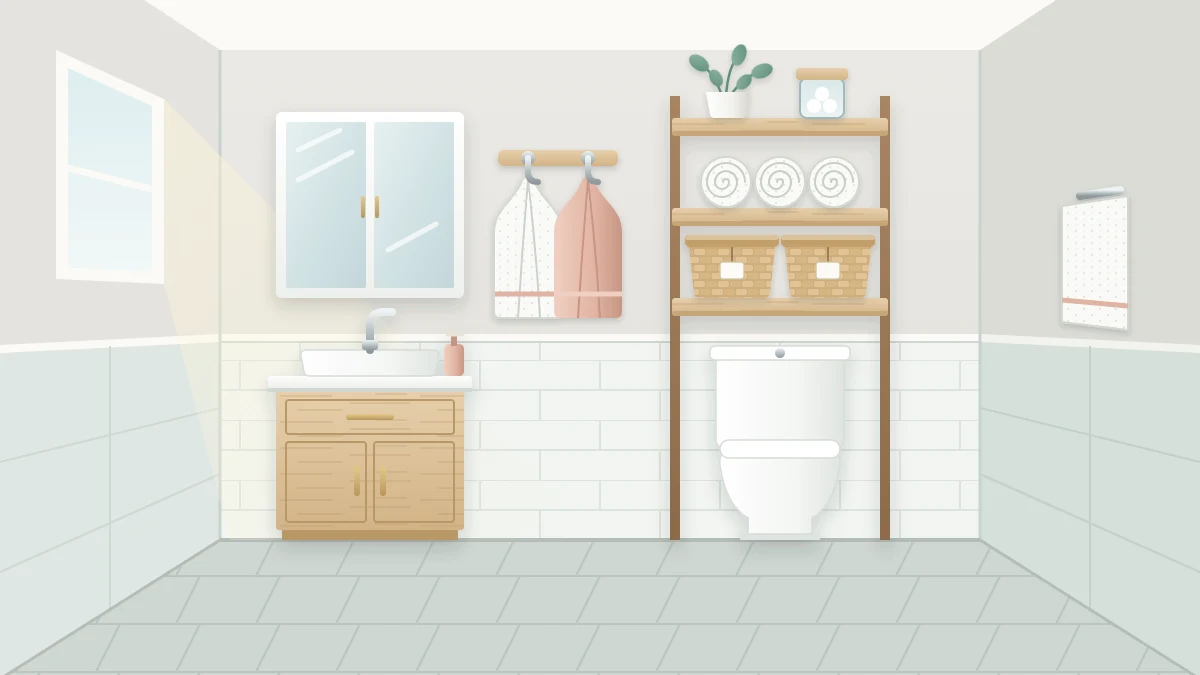
In a very small bathroom, it can feel as if there is nothing to organize with: one narrow vanity, perhaps a mirror cabinet, and a floor you can cross in two steps. Small bathroom organization is less about finding clever products and more about making a few decisions in the right order.
The five steps below are listed by priority. The first costs nothing and makes the biggest difference, so begin there even if the later ones look more appealing.
1. Keep less in the room
A small bathroom has room for the daily kit and little else. That means the items each person uses every day or every week, one or two towels per person, and the paper goods for the week ahead.
Everything else moves out: backups, bulk paper goods, spare towels, travel bags and things used a few times a year. A hallway closet, a bedroom shelf or a labeled bin in another room will do. If you have not sorted through your things yet, the steps for decluttering a bathroom come first, because the less you keep, the less storage the room has to provide.
Tip
Keep the backups together in one container outside the bathroom. One glance tells you what you have, and restocking becomes a single trip.
2. Find the unused volume
Small rooms still have empty space; it is rarely at floor or counter level. Stand in the doorway and look at each of these spots.
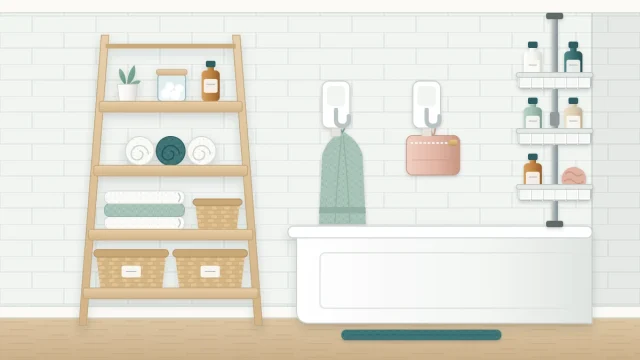
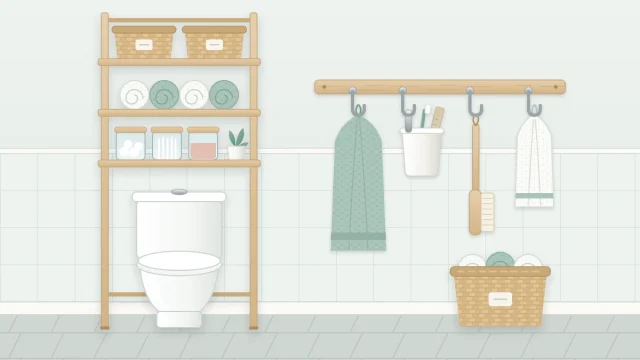
- The wall above the toilet: usually the largest empty area in the room.
- The back of the door: room for hooks or a rack for towels and robes.
- The wall beside the mirror: a narrow ledge or a slim cabinet.
- The space above the door: a high shelf for lidded bins of items you rarely need.
- Inside cabinet doors: shallow racks or adhesive pockets for flat, light things.
- The corner of the shower: a corner shelf or caddy in place of bottles on the floor.
- The gap beside the vanity: sometimes wide enough for a slim rolling cart.
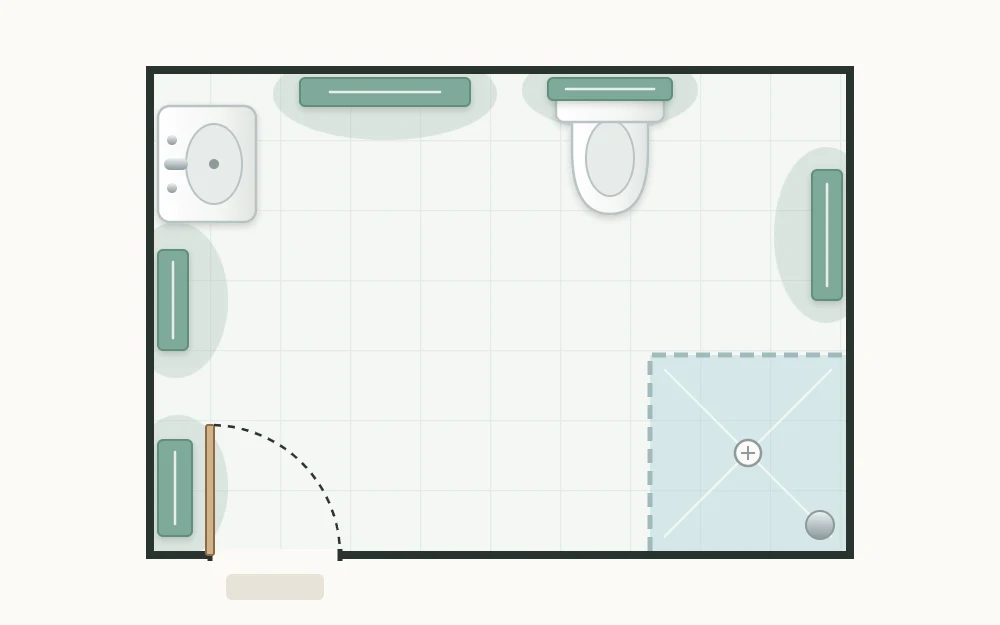
Most of these are above eye level or behind something, which is why they go unnoticed. The guide to vertical bathroom storage explains how to use walls and doors in detail, including what to place at each height.
3. Choose slim, vertical and multi-purpose pieces
When you add something, favor pieces that go up instead of out. A tall, narrow shelf uses the same floor area as a small table and stores several times as much. A shallow cabinet that stands out only a little from the wall leaves the room walkable.
Pieces that do two jobs earn their place: a mirror cabinet in place of a plain mirror, a shelf with a rail beneath it, a stool that holds a towel during a shower and a basket underneath. Measure the spot before choosing, and check that doors and drawers nearby still open fully.
4. Keep the floor and counter clear
Clear surfaces do more than any single organizer, because they make a small room feel larger and easier to clean. Each item standing on the floor or the counter breaks the room into smaller pieces and has to be moved before you can wipe around it.
Aim for nothing on the floor that could hang or sit on a shelf instead, and limit the counter to what is used daily, grouped on one small tray. Where something has to stand on the floor, such as a wastebasket, choose one and give it a fixed spot.
5. Use closed or uniform containers
In a small room, everything is close to your eye, so a shelf of mixed packaging looks cluttered even when it is in order. Closed containers, or open ones that match, cut that visual noise.
Two or three identical baskets on an over-the-toilet shelf look like one calm block. Opaque bins hide a jumble of packages, and a simple tag tells everyone what is inside. Keep to one or two materials and one color family across the room.
Common small-bathroom problems and where to go next
| Problem | Fix | Where it is covered |
|---|---|---|
| No cabinet under the sink | Storage that fits around or beside a pedestal | Pedestal sink storage |
| No drilling allowed | Freestanding, tension, over-the-door and adhesive options | Renter-friendly bathroom storage |
| Cabinets are full | Use walls, doors and the space over the toilet | The vertical storage guide linked above |
| Too much to fit anywhere | Reduce first, then move backups out of the room | The decluttering steps linked above |
| Counter always covered | Daily items only, on one tray; the rest behind a door | Steps 4 and 5 here |
What to avoid in a small bathroom
- Bulky freestanding furniture. A deep cabinet or wide shelf unit that narrows the walkway makes the room harder to use every day.
- Anything in the path of the door. Check the full swing of the door, and of the shower door, before placing a cart, hamper or stand.
- Storage that blocks the shut-off valve. The valves under the sink and beside the toilet need to stay reachable, so keep bins and furniture clear of them.
- Storage that blocks the window. You need to be able to open it, and the room needs the daylight.
- Too many small organizers. A dozen little holders can add clutter of their own. Fewer, larger containers are calmer.
Good to know
For any shelf, hook or rack, follow the product’s instructions and stated load rating, and use fixings suited to your wall type. Anchor tall freestanding units as their instructions direct. Renters should check the lease before drilling, and if you are unsure about drilling into tile or what is behind a wall, ask a professional.
Work through it one step at a time
You do not need to do all five in a weekend. Reduce what is in the room first and live with the result for a few days; you may find the space problem is smaller than it seemed. Then pick the single emptiest spot from step two and put it to work. Add one piece at a time, checking after each that the room is still easy to move around in.
Frequently asked questions
How do you organize a small bathroom with no storage?
Start by keeping only daily items in the room and moving backups elsewhere. Then use the empty space on the walls and door: a shelf unit over the toilet, hooks behind the door and a mirror cabinet over the sink. Add one piece at a time so the room stays easy to move around in.
What should not be kept in a small bathroom?
Anything you do not use there daily or weekly is a candidate to move: bulk paper goods, unopened spares, extra towels, travel bags and seasonal items. A closet or a labeled bin in another room can hold them, and the bathroom then only has to store what is in use.
How can a small bathroom look less cluttered?
Clear the floor and the counter first, since open surfaces make the room feel larger. Then swap mixed packaging on open shelves for a few matching baskets or closed bins, and keep to one or two materials. The room holds the same things but reads as tidy and uncluttered.