Common Bathroom Organization Mistakes and How to Fix Them
Ten common reasons an organized bathroom slides back into clutter, each with why it backfires and a practical fix you can apply without starting over.
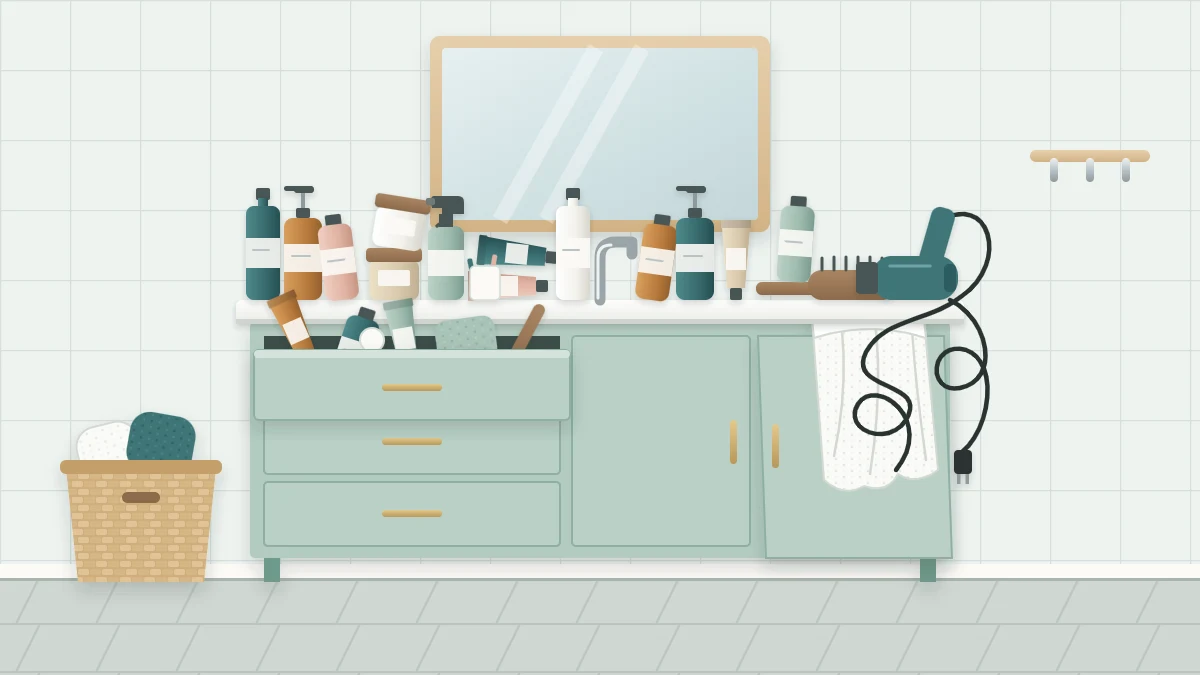
If you have organized your bathroom before and watched it slide back into clutter, the cause is rarely laziness. It is usually one or two common bathroom organization mistakes built into the setup, quietly making it harder to put things away than to leave them out.
The ten below are normal, and almost everyone makes several of them. Each comes with the reason it backfires and a fix you can apply without starting over.
Mistakes made before you start
1. Buying organizers before decluttering or measuring
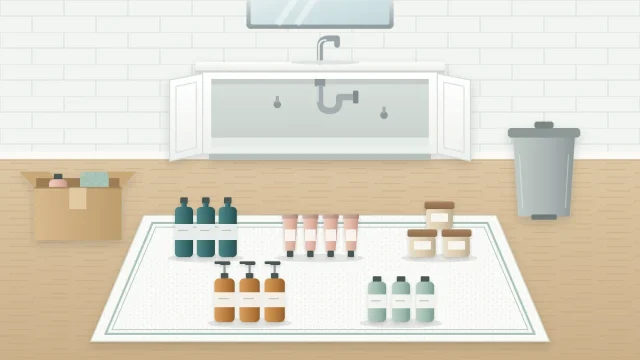
Why it backfires: containers chosen by eye rarely fit the drawer, and they end up holding things you did not need to keep. The purchase feels like progress while the amount of stuff stays the same.
The fix: reduce first, using the steps for decluttering a bathroom, then follow the guide on measuring drawers for organizers before buying anything.
Mistakes in where things live
2. Storing by product type alone
Why it backfires: keeping all skin items together sounds logical, but it puts the bottle you use twice a day beside one you open twice a year. The daily item gets buried and ends up living on the counter.
The fix: sort by type, then split each type by how often it is used. Daily items get the easiest spots, and occasional ones move back or down.
3. Keeping backups mixed in with the open item
Why it backfires: spares crowd the space you reach into every day, and it becomes easy to open a second tube before the first is finished.
The fix: give backups their own spot, away from daily storage: the back of the vanity cabinet, a high shelf or a closet outside the bathroom. One glance then tells you what you have before you shop.
4. No home for the things other household members use
Why it backfires: a system designed around one person’s routine leaves everyone else’s items with nowhere to go, so they land on the nearest flat surface.
The fix: give each person a defined space, even a small one, such as a drawer section, a shelf or a bin. Make the homes obvious enough that nobody has to ask.
Mistakes inside containers
5. Filling every container to the brim
Why it backfires: a full bin looks efficient, but putting one item back means rearranging the rest. People stop bothering, and the item stays out.
The fix: leave some slack in every drawer and bin, as a starting point roughly a quarter of the space. If a container is always full, the category needs trimming or a larger home.
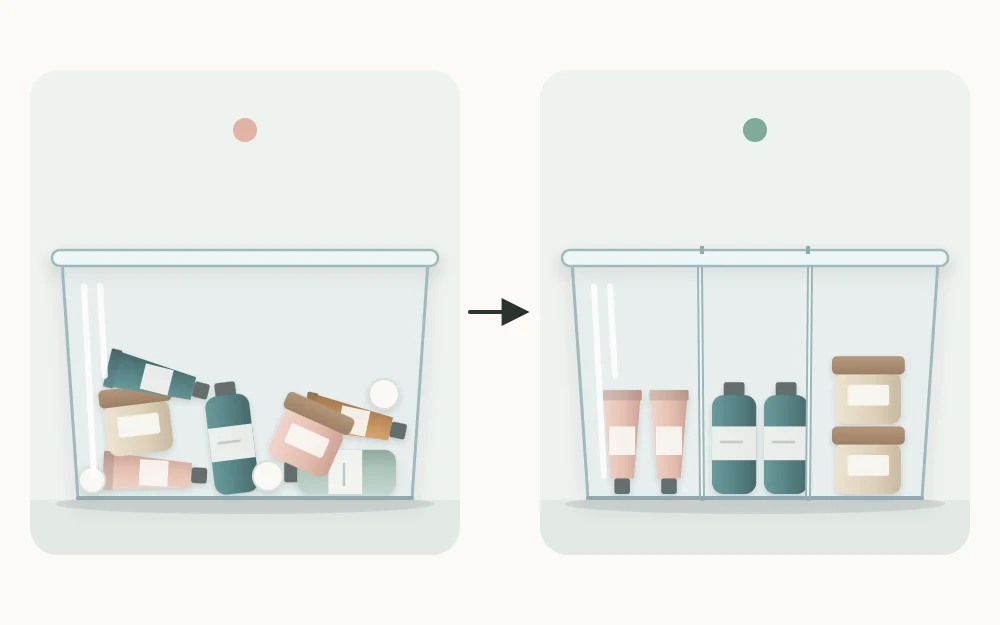
6. Deep bins with no dividers
Why it backfires: small things sink to the bottom of a deep bin and bigger ones sit on top. Finding a hair tie means digging, and digging undoes whatever order there was.
The fix: match container depth to item size. Use shallow trays for small items, add dividers to deep bins, and stand things upright in rows where you can so each one is visible from above.
Mistakes with surfaces and space
7. A crowded countertop
Why it backfires: the counter is the easiest place to put things down, so it fills first. A crowded counter is harder to wipe, and each item left out invites another.
The fix: allow only what is used every day, grouped on one small tray so the limit is visible. Everything else gets a home in a drawer or cabinet close by.
8. Ignoring vertical and door space
Why it backfires: when storage stops at counter height, drawers and cabinets overflow while the walls and the back of the door do nothing.
The fix: look up. A shelf above the toilet, hooks on the wall or a rack on the back of the door can take towels and robes out of the cabinets; the guide to towel storage ideas covers the options.
Good to know
For any shelf, hook or rack, follow the product’s instructions and stated load rating, and use fixings suited to your wall type. Renters should check the lease before drilling. If you are unsure about drilling into tile or what is behind a wall, ask a professional.
9. Open storage for visually busy items
Why it backfires: an open shelf of mixed bottles, tubes and boxes in different colors looks cluttered even when every item is in its place.
The fix: keep open shelves for things that look calm in a group, such as folded towels or a row of matching baskets. Busy items go behind a door, in a drawer or inside a bin.
The mistake that undoes the rest
10. No reset habit
Why it backfires: every setup drifts with daily use. Without a regular moment to put things back, small strays add up until the room needs a full overhaul again.
The fix: attach a short reset to something you already do, such as the last visit to the bathroom at night. Return strays to their homes and clear the counter. A couple of minutes a day is easier than an afternoon every few months.
Which mistake to fix first
You do not need to work through all ten. Pick the one that explains your most annoying daily moment. If you can never find things, look at mistakes 2 and 6. If the counter is always covered, look at 5 and 7. If the room falls apart whenever someone else uses it, look at 4.
Fix that one, live with it for a week or two, then choose the next.
If the whole setup needs a rethink
Sometimes several of these apply at once, and patching them one by one feels like more work than starting fresh. In that case, go back to the order that prevents most of them: reduce, assign homes, then add containers. The guide to bathroom organization for beginners walks through that order from the start.
Frequently asked questions
Why does a bathroom get cluttered again after it has been organized?
Usually because putting things away takes more effort than leaving them out. Overfilled containers, homes that are far from where items are used, and the lack of a short daily reset are the most common causes. Fixing the one that matches your daily frustration often makes a clear difference.
What is the most common bathroom organizing mistake?
Buying organizers first is a very frequent one. Containers bought before decluttering and measuring often do not fit the space and end up storing things that did not need to be kept. Reducing what you own and measuring the emptied space first makes every later purchase more accurate.
How full should bathroom drawers and bins be?
Leave some slack rather than filling them completely. As a starting point, aim to keep roughly a quarter of each drawer or bin free, so an item can go back in without rearranging the others. If a container is always full, trim the category or give it a larger home.