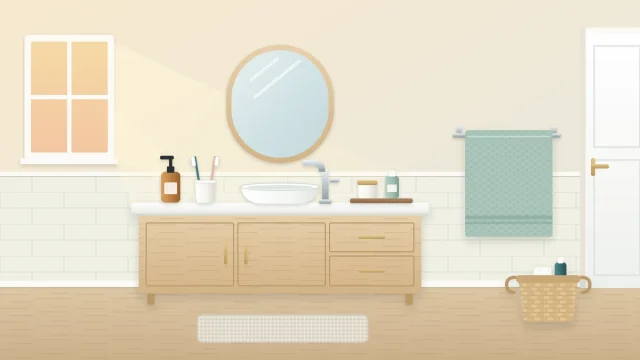
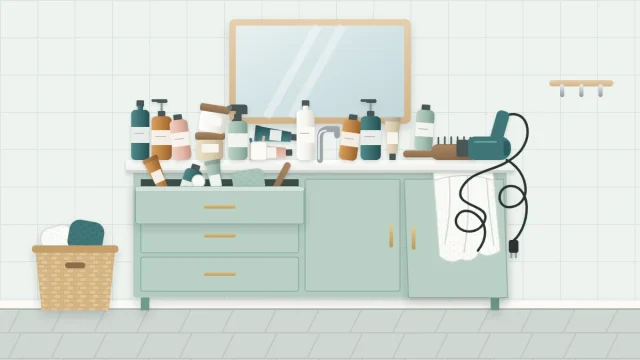
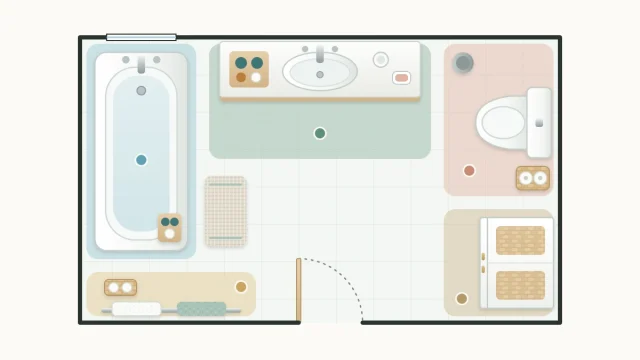
Bathroom Organization for Beginners: Where to Start
A plain starting point for a cluttered bathroom: the three steps to take in order, the storage most bathrooms already have, and a first session that fits into half an hour.
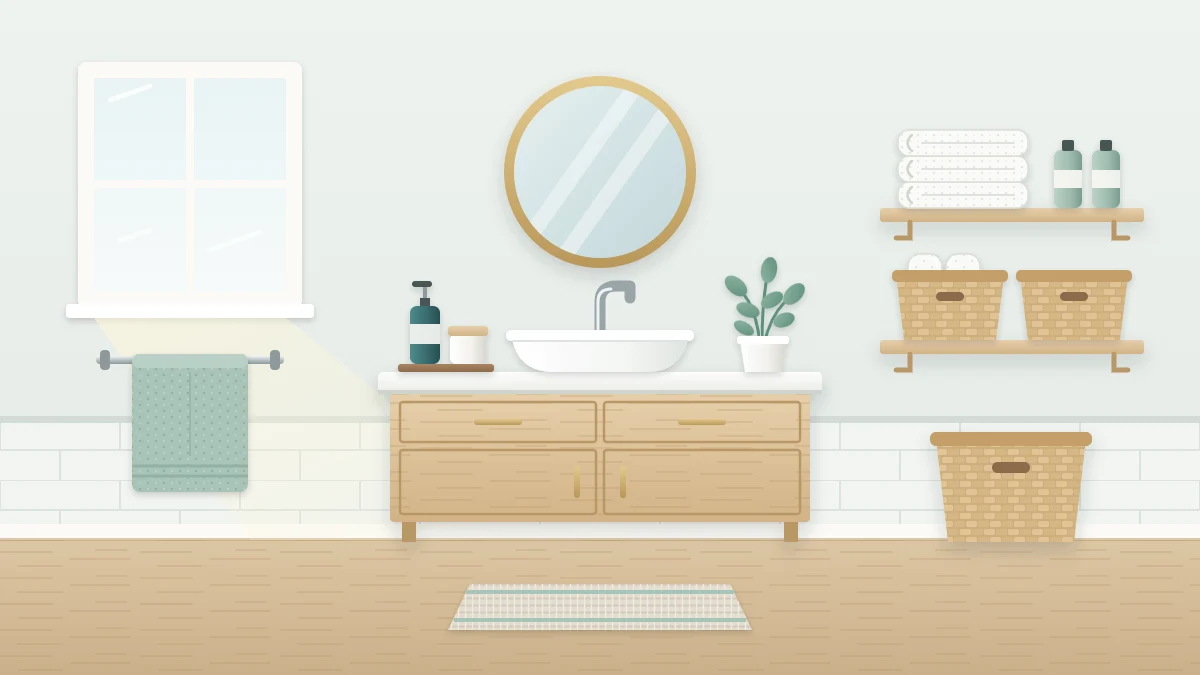
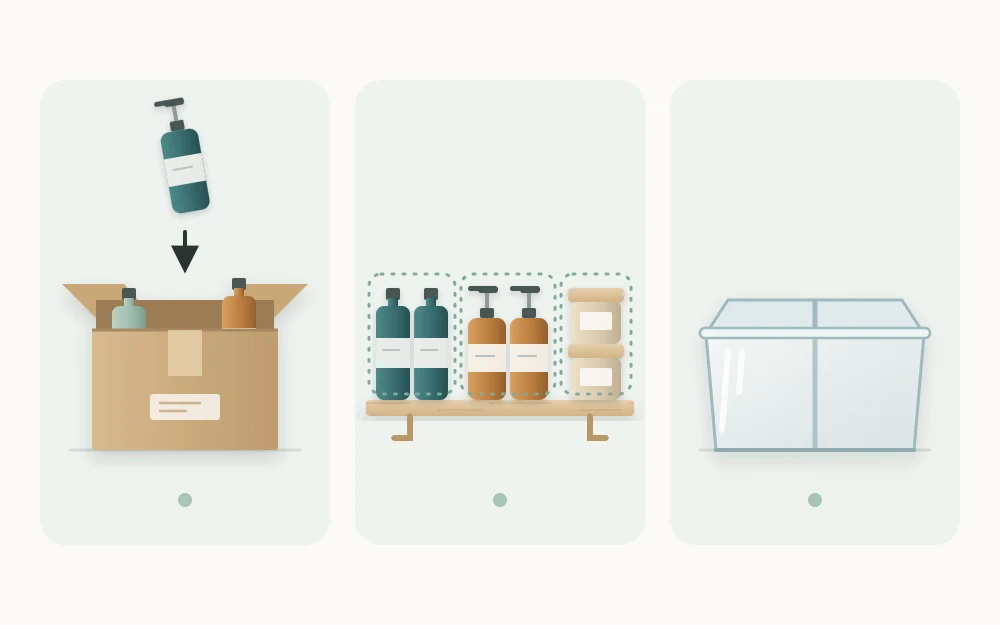
Bathroom organization for beginners is simpler than the aisles of bins and baskets in a home store suggest. It is three jobs done in a fixed order: reduce what is in the room, give every remaining category a fixed home near where it is used, and only then add containers that fit the space.
Most people start with the third job, which is why so many bathrooms drift back to clutter a few weeks after a tidy-up. This guide explains the order, the storage a typical bathroom already has, and a first session small enough to finish today.
Why buying organizers first usually fails
A set of matching bins feels like progress, and that is the trap. Bought before anything else is decided, organizers tend to fail for two plain reasons.
- The sizes are guesses. A drawer organizer that is a little too wide does not fit at all, and one that is too small slides around. Until you know the inside dimensions of the drawer or shelf, and what has to go in it, every purchase is a gamble.
- They organize clutter. Containers hold whatever you put in them, including the half-used bottles, duplicates and things nobody in the house uses. The room looks neater for a while, but it holds just as much as before, and now the containers take up space too.
There is a quieter third problem. Until you have sorted what you own, you do not know how much of each category there is, so you cannot know whether hair accessories need a small tray or a whole bin.
The three steps, in order
1. Reduce what is in the room
Every item that leaves is one you never have to store, move or tidy again. That makes reducing the step with the biggest payoff, and it costs nothing. The full method, with the sorting categories and the questions that make decisions easier, is in the guide on decluttering a bathroom before you organize it.
2. Give each category a fixed home
A home is a specific spot, not a general area. “The top left drawer” is a home; “somewhere in the vanity” is not. The best home for a category is close to where you use it, and the easiest spots to reach go to the things you use every day. This idea has its own guide: organizing a bathroom into daily-use zones.
3. Add containers that fit
Only now do containers earn their place. With the categories and their homes settled, you can measure the exact spot, count what has to fit, and choose a divider, tray or bin for that job. Many bathrooms need fewer containers than expected at this point, and a few shelves need none.
The storage a typical bathroom already has
Before adding anything, take stock of what the room offers. Bathrooms differ, but most have some mix of these.
- Vanity cabinet. Deep and roomy, suited to taller bottles, bulkier items and backups. Things tend to vanish at the back, which the guide to vanity cabinet organization deals with.
- Drawers. The best spot for small daily items, because everything is visible from above once it is divided.
- Medicine cabinet. Shallow shelves at eye level, good for small things you reach for at the sink.
- Under-sink space. An awkward shape around the pipes, often used for cleaning supplies, which stay in their original labeled containers. Keep the shut-off valves reachable.
- Shelves. Open and easy to reach, so they suit towels and a few tidy baskets rather than a crowd of loose bottles.
- Shower and bath. Room for what is used there and little else.
- Door and wall space. Hooks, bars and racks for towels and robes. Follow each product’s instructions and stated load rating, and use fixings suited to your wall type.
A sensible first session: one drawer or one shelf
Do not start with the whole room. Pick one small, contained space, ideally the drawer you open most, and finish it completely.
- Empty the drawer or shelf onto a towel on the counter.
- Remove anything that is empty, unused or belongs in another room.
- Sort what is left so like items sit together: dental things in one group, hair things in another.
- Wipe the empty space and let it dry.
- Put the groups back, with the most-used group at the front.
That is a complete round of the method in miniature, and it usually takes less than half an hour. You will also learn something useful: which groups are bigger than you thought, and whether loose items would benefit from a divider. Write down the inside measurements of the space while it is empty.
Tip
Before buying dividers, try small boxes or lids you already own as stand-ins for a week. If the layout works, you know exactly which sizes to look for.
What “organized” realistically looks like
A bathroom is a small, humid room that several people may use in a hurry, several times a day. It will never look like a showroom for long, and it does not need to. A realistic standard is easier to keep than a perfect one.
- You can find any item without moving three others.
- Everyone who uses the room knows where things go.
- The counter can be cleared in a couple of minutes.
- You know what backups you have, so you stop buying duplicates.
A bottle on the counter in the morning is not a failure. A bottle with no home to go back to is the thing worth fixing.
Where to go next
Work outward from that first drawer, one space per session: the other drawers, then the vanity cabinet, then shelves and the shower. Keep the same order each time, and resist shopping until a space has been reduced and assigned.
Once the room is set up, a short routine keeps it that way. The guide on how to keep a bathroom organized covers the daily and weekly habits that stop clutter from creeping back.
Frequently asked questions
Where should I start when organizing a bathroom?
Start with one small space, such as the drawer you open most often. Empty it, remove what is unused, group similar items and put them back with the most-used group at the front. Finishing one drawer completely teaches the whole method and gives you a result you can see the same day.
Should I buy bathroom organizers before I declutter?
It is usually better to wait. Until you have reduced what you own and decided where each category will go, you cannot know which sizes or how many containers you need. Measure the emptied space, count what has to fit, and then choose a divider, tray or bin for that specific spot.
How long does it take to organize a bathroom?
It depends on the size of the room and how much is stored in it. A single drawer or shelf often takes less than half an hour. Many people find it easier to work through the room in several short sessions, one storage area at a time, than to attempt everything in one day.