Skincare Storage: Organizing a Routine by Step
How to arrange skincare by routine instead of by brand: a morning row and an evening row in the order you already use them, a second container for occasional products, and a home that matches each label.
A skincare collection tends to grow one bottle at a time, and the storage rarely grows with it. The result is a crowded shelf where the three things you use every morning are mixed in with the ten you use now and then, and the routine starts with a search.
This is an organizing guide, not skincare advice: it says nothing about what to use or when. It assumes you already have a routine and shows how to arrange skincare storage around it, so that the daily steps run in one pass and everything else stays out of the way.
Arrange by routine, not by brand
Matching bottles look tidy lined up together, but a row sorted by brand or by size makes you hunt. A row sorted by routine does the thinking for you.
Start by taking everything out and making two sets:
- The morning set: only what you use on a normal morning.
- The evening set: only what you use on a normal evening.
Then line up each set in the order you already use it, left to right or front to back. The first thing you reach for sits at the start of the row and the last sits at the end. When you finish a step, the container goes back to its own gap, and your hand moves along to the next one.
If a product appears in both routines, place the two sets side by side so it is within reach of both. If the sets are nearly identical, one row is enough.
Choose a home for the daily sets
The daily sets belong at the spot where you use them, usually at the mirror. Several kinds of home work well, depending on your bathroom:
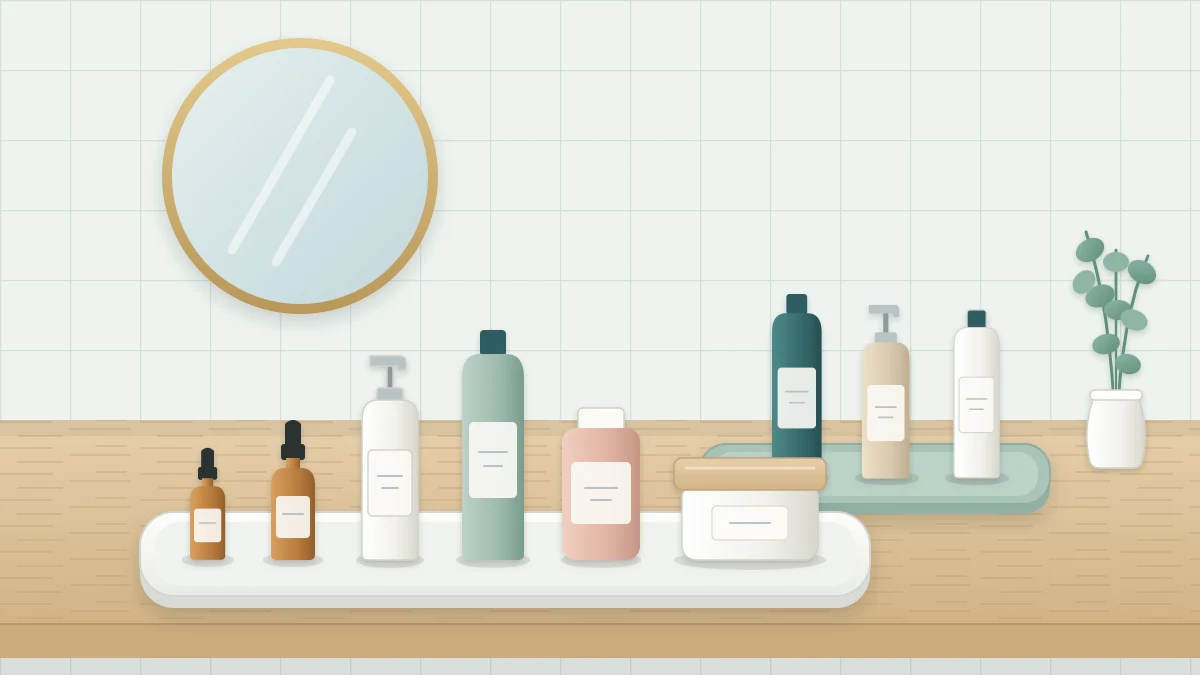
- A tray on a shelf. A shallow tray gives the row a boundary and lifts out in one move when you wipe the shelf.
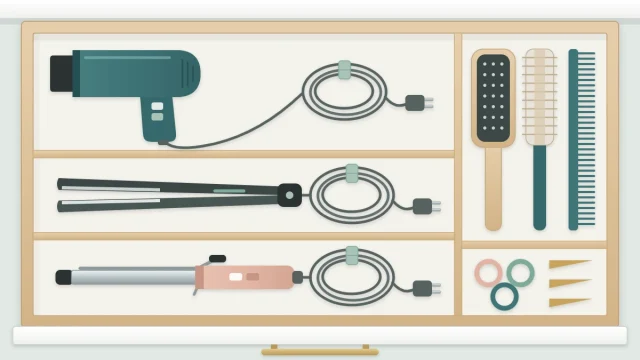
- A section of the top drawer. A modular drawer tray keeps the containers in order and off the counter. Measure the tallest bottle against the inside height of the drawer first.
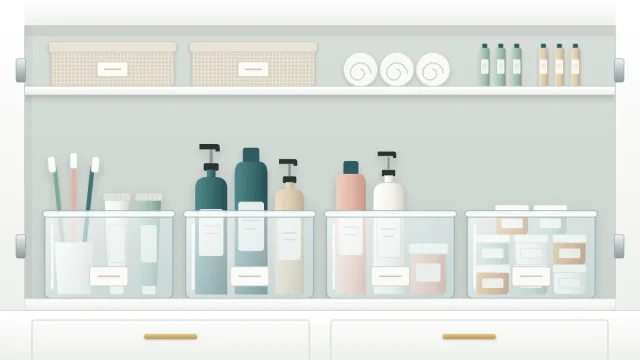
- A mirror-cabinet shelf. Shallow shelves suit small containers, and one shelf per routine is easy to remember. The guide to organizing a medicine cabinet covers shelf heights and layout.
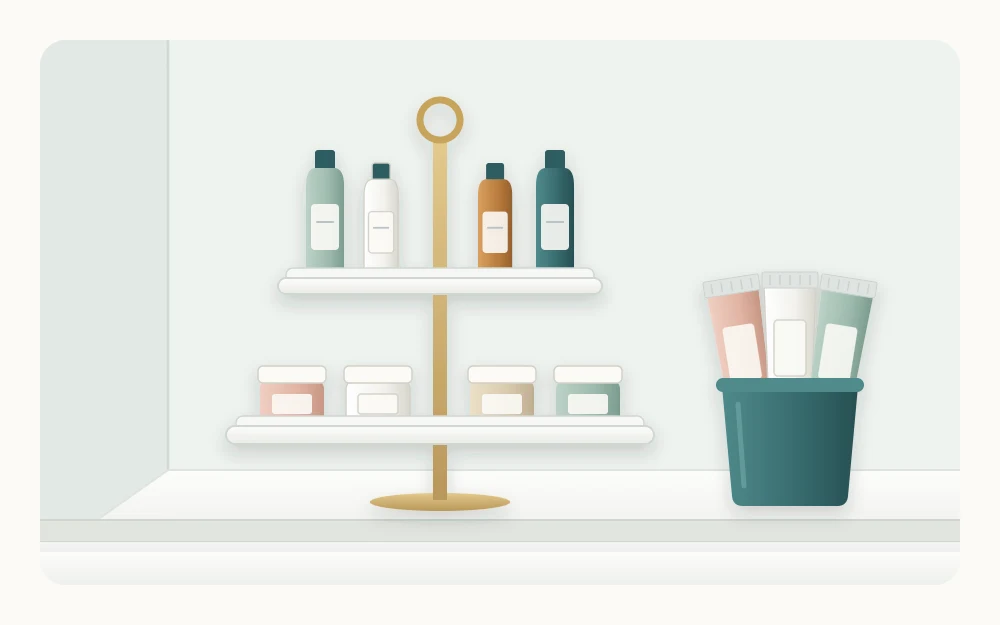
- A small tiered stand. Two levels fit a full routine into the footprint of a few bottles.
- A lidded organizer. A box with a lid or a door keeps the set together and out of sight.
Closed or shaded storage, such as a drawer, a cabinet or a lidded box, also keeps bottles out of direct sunlight and away from splashes at the sink. If you prefer the set on the counter, keep it compact and give it a tray; the guide to keeping a bathroom counter clear explains how to decide what earns counter space.
Move occasional products to a second container
Anything you use weekly or only now and then should not sit in the daily row. Give those products a second container and place it behind or below the daily sets: the back of the shelf, the next drawer down, or a higher mirror-cabinet shelf.
The test is simple. If you would not reach for it on an ordinary day, it goes in the second container. That keeps the daily row short enough to read at a glance.
Keep small containers visible
Skincare comes in awkward shapes: short jars, slim dropper bottles and soft tubes. Lined up on a flat shelf, the short ones disappear behind the tall ones.
- Shelf risers: a small riser lifts the back row so every label shows.
- Compartments: a divided tray or drawer organizer gives each jar its own square, so it does not slide when the drawer opens.
- Tubes: stand them cap-down in a cup. They take less room and stay put.
- Dropper bottles: store them upright in a compartment narrow enough to stop them tipping.
Turn every label to face you. In a drawer, a small dot sticker on each lid tells containers apart from above.
Keep backups out of the daily area
Unopened spares do not belong beside the open ones. They take up the best space and make the row harder to read. Store backups, still sealed, in your household’s backup zone with the other spare toiletries, grouped by type with the next-to-use at the front.
If you do not have a backup zone yet, the guide to organizing toiletries and their backups shows how to set one up and how to cap the number of spares you keep.
Match the spot to the label
Products differ, and this site does not make general statements about how any type of product should be kept. The storage directions on each label or package are the ones to follow.
In practice, that means reading the label before you assign a home. If a label says to keep a product cool, dry or away from light, choose a spot that matches. For some products that spot may be outside the bathroom, such as a bedroom drawer. A routine split between two rooms is perfectly workable.
Good to know
If a label is missing or unreadable and you are not sure how a product should be stored, check the manufacturer’s own information instead of guessing.
Dates and symbols on the package
The same approach applies to how long to keep something. Rather than following a general rule, look at the package itself: follow any date printed on it and any period-after-opening symbol, which usually looks like a small open jar. Obvious changes in smell, color or texture are also a signal to stop and check.
For background, see the U.S. Food and Drug Administration’s page on shelf life and expiration dating of cosmetics.
One organizing habit helps: when you open a new product, write the opening date on a small sticker on its base, so you can compare it with what the package says.
Reset the row once a week
A routine row drifts slowly: a new purchase gets squeezed in at the end, an occasional product stays out after use. A short weekly reset keeps it in shape.
- Return any occasional products to the second container.
- Put the daily containers back in order and turn the labels forward.
- Remove empties and note what needs replacing.
- Lift the tray and wipe underneath.
Tip
When something new joins the routine, place it in the row at the step where you use it, and decide at the same moment which container it pushes out to the second box.
Frequently asked questions
Should skincare be kept in the bathroom?
It depends on the product. Products differ, so read the storage directions on each label or package and choose a spot that matches them. For many items a bathroom drawer or cabinet is convenient; where a label asks for something the bathroom cannot offer, give that item a home in another room.
How do I organize skincare in a drawer?
Measure the inside height of the drawer against your tallest bottle first. Then use a divided tray so each container has its own compartment, arrange the compartments in the order of your routine, and mark the lids with a small colored sticker so you can tell them apart from above.
How do I know when to stop keeping a skincare item?
Look at the package instead of following a general rule. Follow any date printed on it and any period-after-opening symbol, which usually looks like a small open jar. Obvious changes in smell, color or texture are also a reason to stop and check the manufacturer's information.