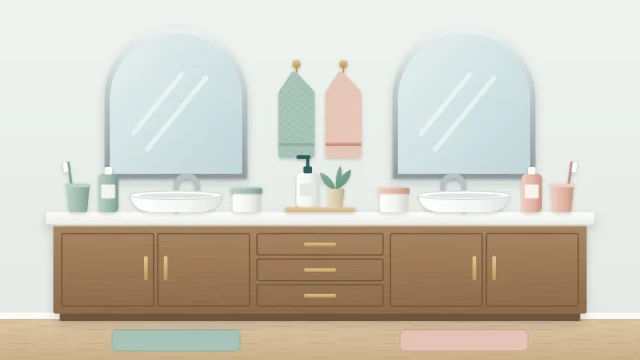
Bathroom Countertop Organization: What Stays Out and What Goes Away
A three-part test for what earns a place on the bathroom counter, the one-tray method for the few items that stay out, and where everything else should go.
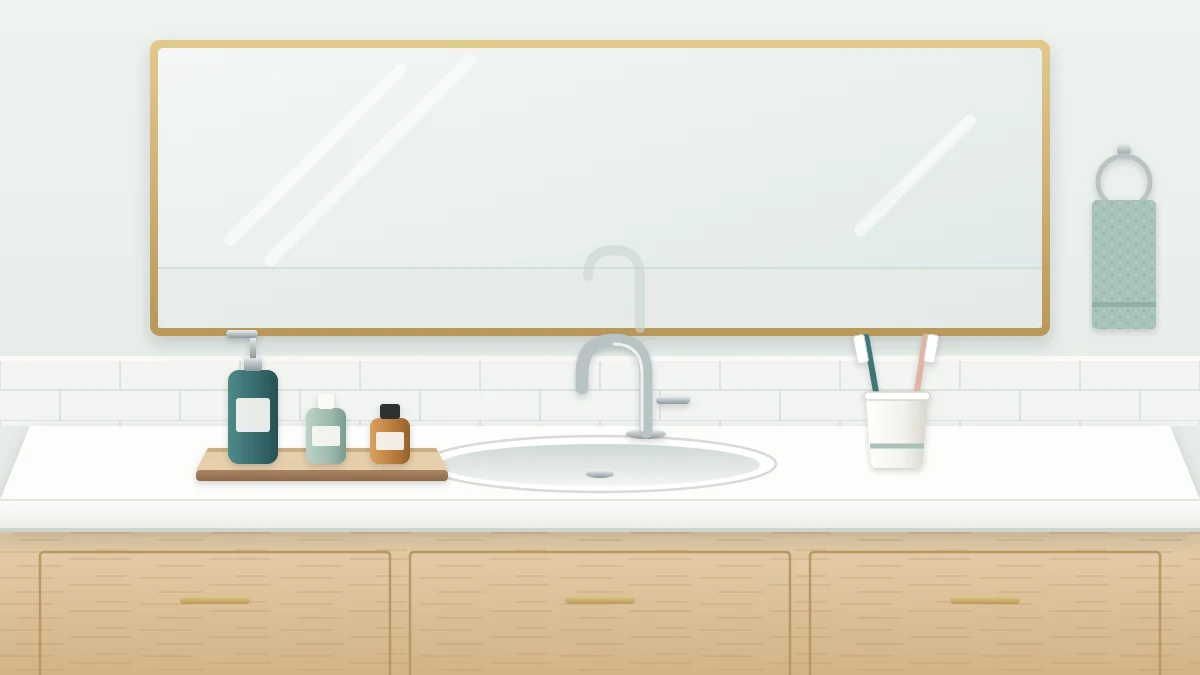
A bathroom counter fills up one bottle at a time. Nothing on it looks unreasonable, yet together the bottles, tubes and cups cover the whole surface, and wiping around the faucet means lifting a dozen things first. Bathroom countertop organization starts with a change of definition: the counter is a work surface, and storage happens somewhere else.
That does not mean a bare counter is the only right answer. It means every item standing out has passed a simple test, and everything else has a home in a drawer or cabinet close by. You can do the whole thing in one session, and you do not need to buy anything to begin.
Why the counter fills up
A counter is flat, open, at hand height and exactly where you finish using things. Setting an item down is always easier than opening a drawer, especially when that drawer is already full. So a crowded counter is usually a symptom of the storage around it: if a product has no free spot nearby, it stays out.
The test for what stays out
An item earns a place on the counter only when all three of these are true:
- It is used at least once a day.
- It is used by most of the people who use this sink.
- It would not be just as easy to reach in the top drawer.
In many bathrooms the survivors are few: hand soap, a toothbrush holder and one tray of daily items. A product used twice a week fails the first question. One person’s hair product in a shared bathroom fails the second. A comb or a tube of toothpaste often fails the third, because a drawer directly below the counter is one short movement away.
Clear it, sort it, put back less
- Take everything off the counter and wipe the empty surface.
- Sort the items into three groups: used every day, used some days, rarely used.
- Run the daily group through the three-part test above.
- Put back only what passed, starting with the hand soap beside the faucet.
- Give every other item a home in a drawer or cabinet before you stop, so nothing drifts back.
The tray method
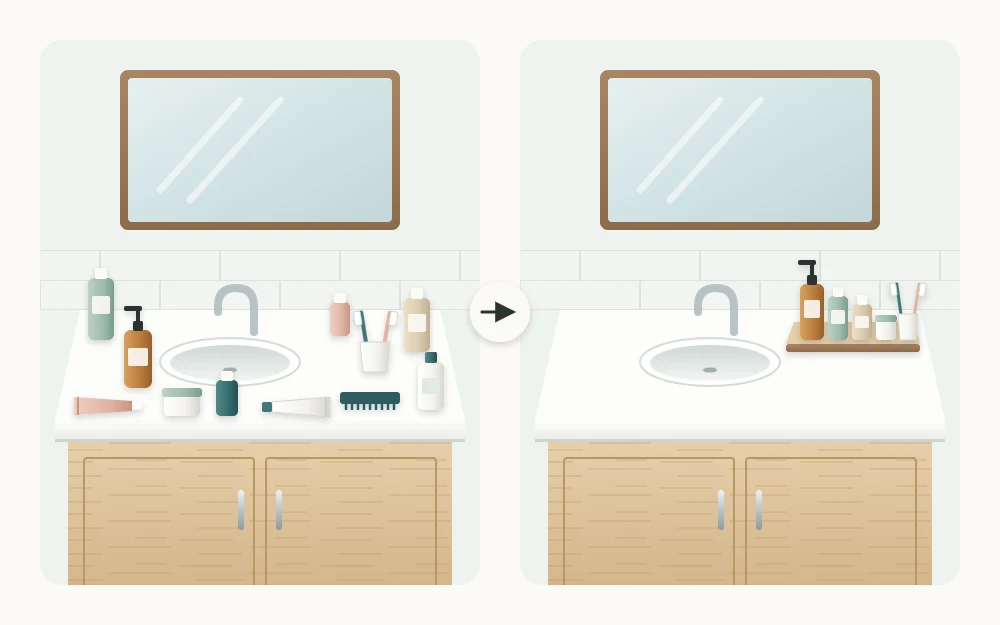
For the few things that stay out, a single tray or shallow dish does most of the work. Items gathered on a tray read as one object instead of five, so the counter looks calmer with exactly the same contents. The tray also sets a limit: when it is full, something has to go to a drawer before anything new comes in.
The practical benefit shows up when you wipe the counter. You lift one tray, wipe, and set it back, instead of moving each bottle in turn. Choose a tray with a low rim and a surface that wipes easily.
Matching containers are optional
Decanting hand soap or cotton pads into matching dispensers and jars is a visual choice, and the counter works just as well without it. If you like the look, keep it to simple items like these. Anything with directions or warnings printed on it is easier to live with in its own packaging.
Use height, corners and the wall
The center of the counter, in front of the mirror, is the part you work at. The back corners are the part you rarely touch, so that is where standing items belong. A small shelf riser or a two-tier stand in one back corner holds the same items on half the footprint.
The wall can take over as well. A wall-mounted cup for toothbrushes or a mounted soap dispenser frees the surface completely, which helps most on a narrow vanity with only a strip of counter on each side of the sink.
Good to know
Follow the instructions and stated load rating of any wall-mounted, adhesive or suction product, and use fixings suited to your wall type. Renters should check the lease first. If you are unsure about drilling tile or what is behind a wall, ask a professional.
Where everything else goes
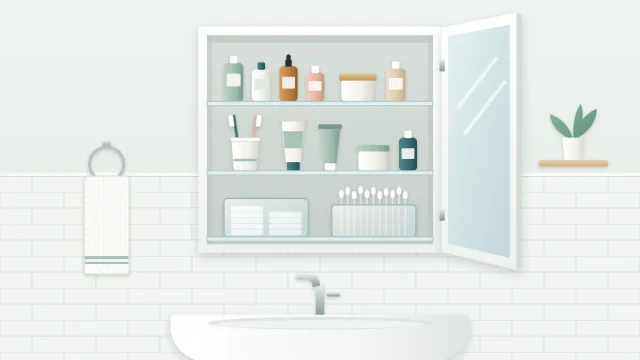
Items that leave the counter should land as close as possible to where they are used, or they will come straight back. Two places do this best. The top drawer suits flat and loose things such as combs, toothpaste, floss and hair ties. The mirror cabinet suits small upright items at eye level, and a guide to organizing a medicine cabinet shelf by shelf covers how to arrange it.
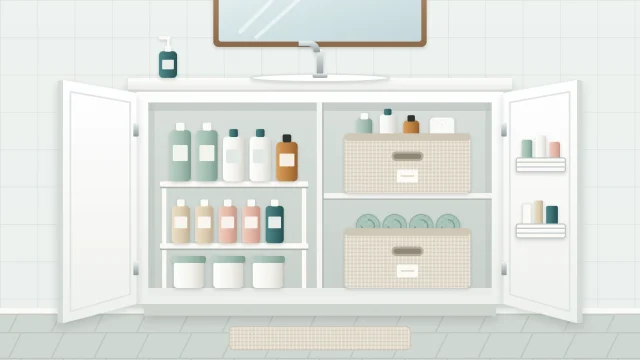
Weekly and occasional items can live farther away, in a lower drawer or the vanity cabinet. If you are not sure which products belong near the sink at all, sorting the room into daily-use zones settles it. Face products are the most common counter crowd, and they have their own guide to storing skincare in a bathroom.
Three counter styles compared
There is no single correct amount of counter. These three levels cover most households, and you can move between them as your routine changes.
| Style | What stays out | Who it suits |
|---|---|---|
| Clear counter | Hand soap only, or a wall-mounted dispenser. | Small vanities with a good top drawer, and anyone who wants the quickest wipe-down. |
| One tray | Hand soap plus one tray of shared daily items. | Most bathrooms, including shared ones with limited drawer space. |
| Tray plus canister | The tray, and one lidded canister for cotton pads or swabs. | Wider counters, and routines that use the canister’s contents every day. |
Water, outlets and cords
Two parts of the counter stay empty whatever style you choose. The first is the splash zone around the faucet, where anything standing ends up wet and sitting in a puddle. Keep the tray and any standing items a hand’s width or more from it, depending on how your faucet sprays.
The second is the area around the outlets. Leave it clear so cords never have to reach across the sink. Hair dryers, styling irons, shavers and toothbrush chargers do not live on a wet counter: put them away unplugged, away from the sink, and only after heat tools have cooled completely as their manual describes. If the room has too few outlets for how you use it, that is a job for a qualified electrician.
After that, the counter needs very little upkeep. At the end of the day, anything standing outside the tray goes back to its drawer, and the surface is ready to wipe.
Frequently asked questions
What should be kept on a bathroom counter?
As a starting point, only things used every day by most people who use the sink, and only when a drawer would not serve just as well. In many homes that comes down to hand soap, a toothbrush holder and one small tray of shared daily items.
How do I keep the bathroom counter clear once it is organized?
Give every item that came off the counter a fixed spot in the top drawer or mirror cabinet, then use the tray as a limit. At the end of the day, anything standing outside the tray goes back to its spot. The habit takes seconds when the storage is close by.
Is a tray on the bathroom counter worth it?
For most counters, yes. A tray groups the daily items so they look like one object, sets a limit on how many things stay out, and lets you lift everything in one move when you wipe the surface. Pick one with a low rim that wipes easily.