Medicine Cabinet Organization: Shelves, Zones and What Belongs
How to turn a crowded mirror cabinet into eye-level storage for the daily routine: what suits it, how to set the shelves, and small tools that group loose items.
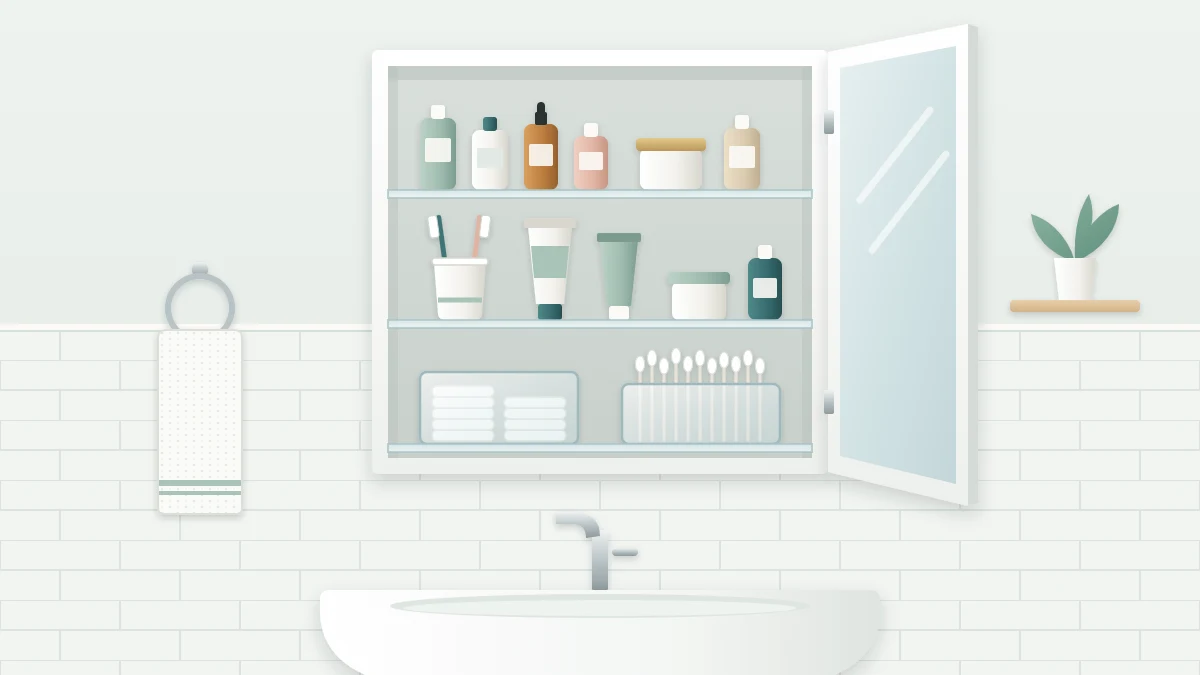
The mirrored cabinet above the sink is the best-placed storage in the room. It sits at eye level, opens with one hand and is a short reach from the faucet. It is also shallow and small, which is why it so often ends up packed with half-used tubes and things nobody can find. Medicine cabinet organization is mostly a matter of deciding what deserves that position and then fitting the shelves to it.
The approach here is simple: daily items only, grouped by use, on shelves set to the height of what they hold. One short section near the end covers medicines, because the name of the cabinet suggests something its location often does not suit.
What suits a mirror cabinet
Shallow shelves favor small, upright things you reach for every day. As a starting point, these categories usually fit well:
- Dental care: toothbrushes, toothpaste, floss.
- The face products you use daily.
- Razors and their spare cartridges.
- Contact lens supplies.
- Cotton swabs and cotton pads.
- Small first-aid supplies such as adhesive bandages.
Tall bottles, bulky backups and anything used once a month do not belong here. Tall and bulky items suit the space below the sink, covered in the guide to organizing a vanity cabinet. Whatever the product, store it the way its own label or package directs, since products differ.
Empty it and sort first
Take everything out and wipe the shelves. Then sort the contents on the counter into groups by use, not by size: teeth, face, shaving, eyes, first-aid supplies. Set aside empties, duplicates and things nobody in the house uses.
What remains is usually far less than what came out. If it still will not fit comfortably, keep the daily items and move the occasional ones to a drawer. A wider method for grouping bottles and tubes across the whole room is in the guide to toiletry organization.
Shelf logic: eye level first
Not all shelves are equal. The one at eye level is the easiest to see and reach, so it gets the items used every morning and night. Less frequent items go on the shelf above. The lowest shelf, just over the sink, suits things you grab with wet hands and little attention, such as a toothbrush cup.
In a shared bathroom, divide the cabinet before you fill it. Two workable patterns:
- One shelf per person, with a shared shelf for dental care and first-aid supplies. This suits a cabinet with three or more shelves.
- One side per person, left and right. This suits a wide cabinet with two doors, where each person opens their own.
Either way, the boundary matters more than the exact split. When each person knows which space is theirs, items stop migrating.
Fit the shelves to the products
Many mirror cabinets have adjustable shelves that sit on small clips or in slots, and most people never move them. Check yours. If a shelf lifts out, try setting it so the tallest daily item clears the shelf above by roughly a finger’s width. Wasted air above short items is where the cabinet loses most of its capacity.
A common result is one taller space for bottles and two or three short ones for small things. If the shelves are glass, handle them with both hands over a towel laid in the sink, and seat each one fully on its supports before loading it.
Small tools that help
A shallow shelf needs very little hardware. Choose from these according to what is loose in your cabinet:
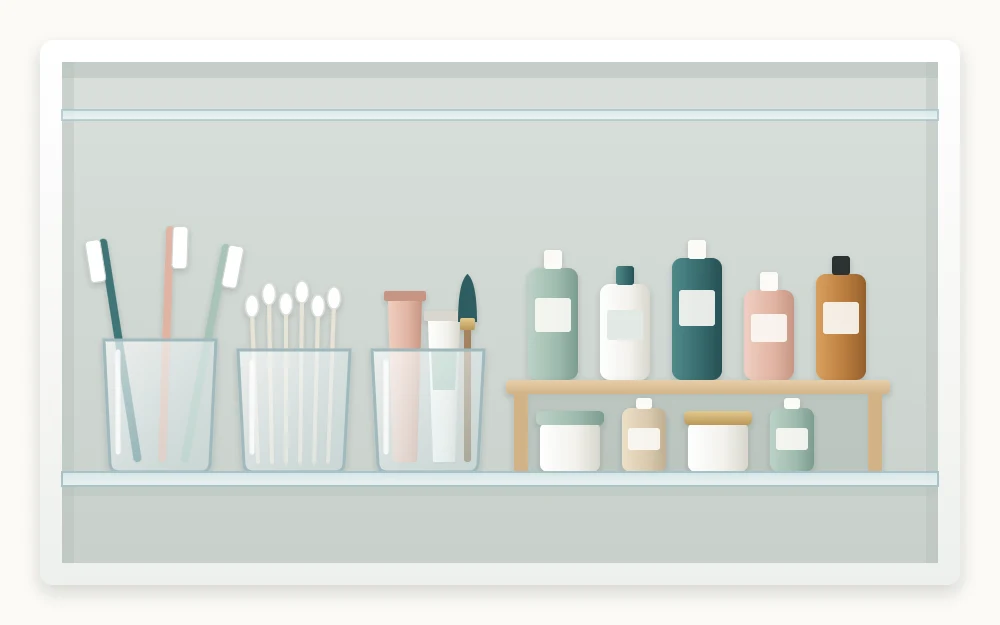
- Small clear bins or cups group loose things such as floss, lens cases and cotton swabs, and lift out as one unit.
- A slim shelf riser at the back of a shelf raises a second row so short items are not hidden behind taller ones.
- A magnetic strip inside the door can carry tweezers, nail clippers and small scissors.
- Small adhesive holders inside the door can take a comb or a razor, if the door still closes freely.
Good to know
Fit magnetic strips and adhesive holders as their instructions direct, and stay within the stated load rating. Check that the surface inside the door is one the product is made for, and that nothing on the door touches the shelves when it closes.
Measure the shelf depth and the clear height before buying any bin or riser. Mirror cabinets are shallower than they look, and a bin that sticks out even slightly will stop the door.
Keep labels facing forward
Once things are grouped, turn every product so its front faces you. In a cabinet this shallow, each item should be readable at a glance and removable without moving another one. A single row per shelf is the goal; where you need two rows, use the riser so the back row stands higher than the front.
Put the items you use in sequence next to each other, in the order you use them. Small adjustments like this are what make the cabinet work for a routine instead of merely holding things.
What about medicines?
Despite its name, a medicine cabinet in a steamy bathroom is often not where medicines should be kept. Heat and moisture can affect them, and products differ, so this guide does not pick a spot for you. Store every medicine as its label or package insert says, in its original labeled packaging, and ask a pharmacist whenever you are unsure. For more detail, see MedlinePlus’s page on storing your medicines.
Where children live or visit, medicines belong up, away and out of sight, in a place they cannot reach. The Up and Away campaign offers further reading for families and for anyone expecting young visitors.
Keeping it that way
A small cabinet drifts quickly, so give it a short reset now and then: turn labels forward, return strays to their group and remove anything empty. Check the date or symbol printed on each package while you are there, and let go of products whose smell, color or texture has clearly changed.
The cabinet and the counter work as a pair. Whatever does not fit behind the mirror tends to land beside the sink, so it helps to decide both together; the guide to what stays out on the bathroom counter picks up from here.
Frequently asked questions
What should go in a bathroom medicine cabinet?
Small upright items used every day suit it well: dental care, daily face products, razors, contact lens supplies, cotton swabs and small first-aid supplies such as adhesive bandages. Tall bottles and unopened backups usually fit better in a drawer or the vanity cabinet below.
Is a medicine cabinet the right spot for medicines, or should I follow the label?
Often not, despite the name. Store every medicine as its label or package insert says, in its original labeled packaging, and ask a pharmacist when you are unsure. Where children live or visit, medicines belong up, away and out of sight, in a place they cannot reach.
How do I organize a medicine cabinet shared by two people?
Divide the space before filling it. Give each person one shelf or one side, and set aside a shared shelf for dental care and first-aid supplies. A clear boundary matters more than an exactly equal split, because it stops items from drifting between sections.