Organizing a Shared Bathroom Vanity for Two or More People
Divide a shared vanity before you organize it: a drawer, shelf or side for each person, clearly shared zones, and layouts for single, double and tiny vanities.
One person’s vanity can be loosely arranged and still work, because that person knows where everything is. A shared bathroom vanity cannot. Two or more people reaching into the same drawers each morning will move, bury and borrow each other’s things unless it is obvious whose space is whose.
So the order of work is different from a solo bathroom. You divide first and organize second. Once each person has a defined territory and the shared items have a defined spot, most of the daily friction disappears without anyone having to be tidier than they already are.
Divide first, then organize
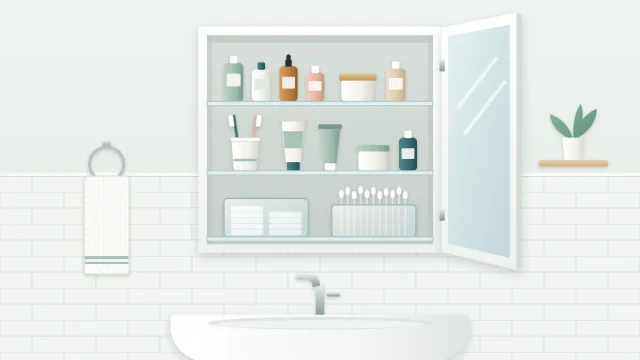
Start by counting the storage you have: drawers, cabinet shelves, mirror cabinet shelves and counter. Then assign it. Each person gets one drawer, one shelf or one side as their own, and that space is theirs to arrange however they like.
Size the shares roughly by need, not by strict equality. Someone with a long routine and many products needs more room than someone with a toothbrush and a razor, and saying so openly works better than a perfectly even split that one person overflows within a week. Agree on the split together, with everything out on the counter so the amounts are visible.
Name the shared zones
Some things belong to the household, not to a person. Give them their own clearly shared spots, apart from the personal ones:
- Hand soap at the sink.
- Dental care basics such as toothpaste and floss.
- First-aid supplies such as adhesive bandages.
- Backups: unopened spares of the things everyone uses.
Shared zones work best in the most central, easiest-to-reach storage, because everyone goes there. If you have not yet sorted the room by how often things are used, the guide to daily-use zones in a bathroom explains the idea that this layout builds on.
Layouts by vanity type
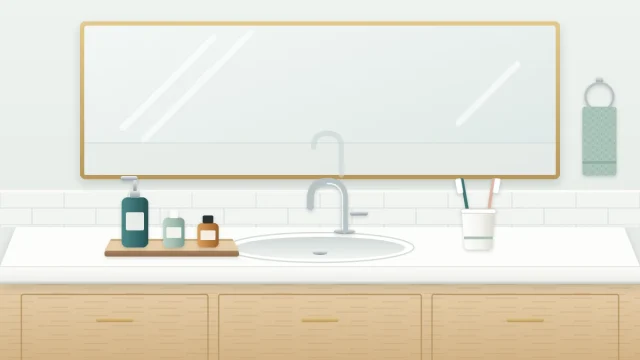
Single sink with a drawer stack
Give each person a drawer of their own and make the top drawer shared, since it is the one everybody opens for toothpaste and floss. With more people than drawers, split a wide drawer left and right with a divider that runs front to back. The guide to laying out a bathroom drawer covers the compartments inside each one.
Double vanity
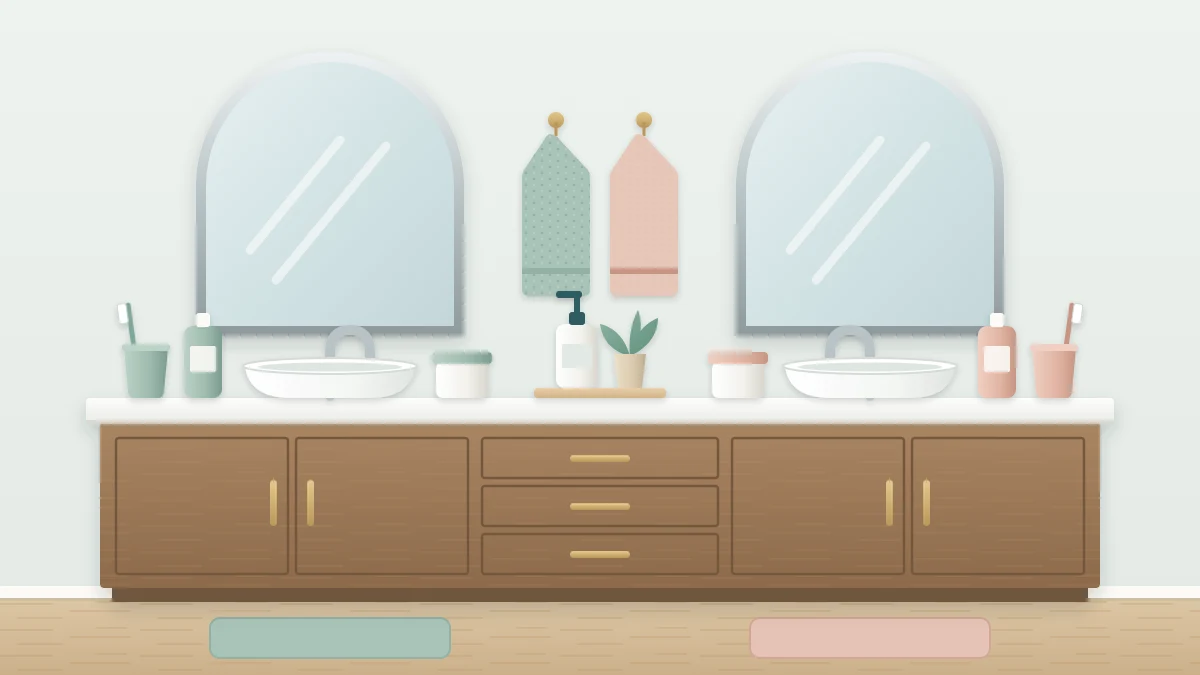
Mirror the layout. Each side holds one person’s things in the same positions: daily items in the top drawer, less frequent ones lower down. Shared items sit in the middle, on one tray between the sinks or in a center drawer if there is one.
Tiny vanity
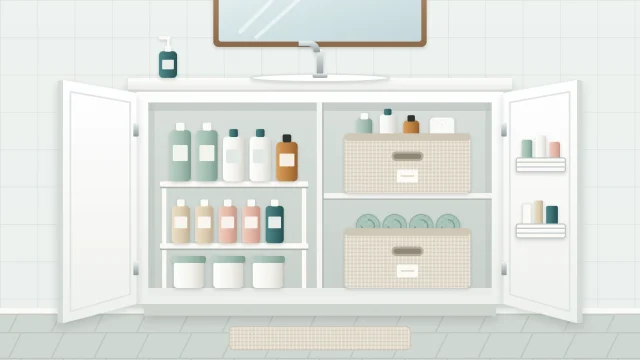
When there is a single small cabinet and no drawers, stop trying to divide the vanity itself. Give each person a handled caddy or bin that lives on a shelf and comes to the sink when needed, then goes back. The vanity keeps only the shared items.
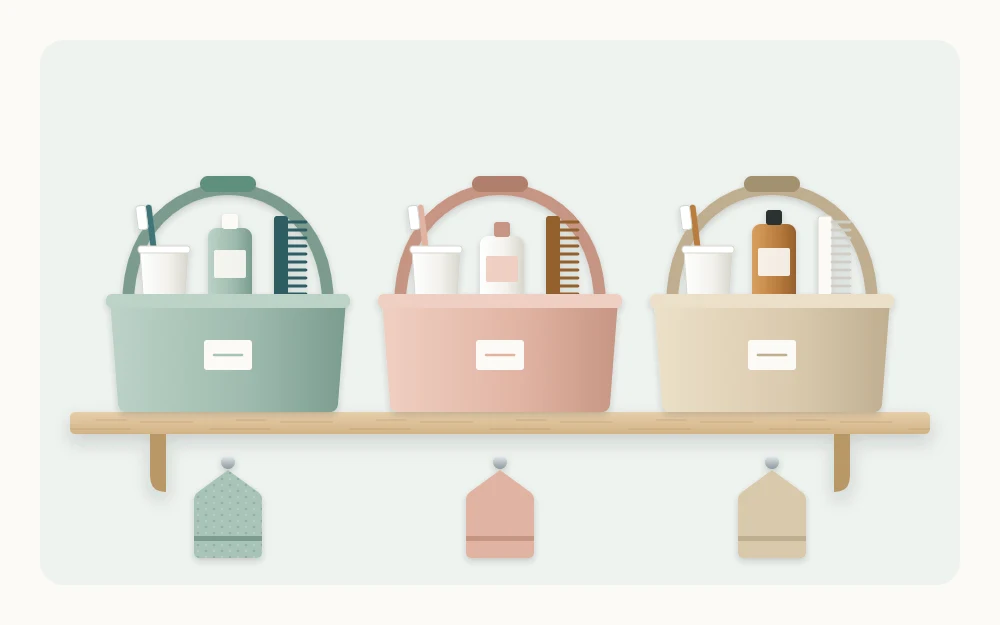
Choosing a caddy that suits a damp room and fits your shelf is covered in the guide to bathroom baskets and bins.
Color or label per person
A boundary only holds if people can see it. Two simple ways to mark it:
- Color. One color per person for the toothbrush, cup, washcloth, caddy or drawer tray. This is the easiest system for young children and for guests.
- Labels. A name or initial on the drawer edge, bin or shelf. Labels suit adults and older children, and they help when containers all match.
You do not need both everywhere. Mark the containers and the spaces; individual products rarely need it once they have a fixed place.
Plan for morning traffic
The real test of a shared vanity is two people getting ready at once. Look at which items are used at the same time by different people, and keep those in different spots. If one person needs the mirror and the top drawer while another only needs to brush their teeth, the dental care should not be in that drawer.
A few adjustments that often help:
- Keep dental care where it can be reached from the side without standing at the center of the sink.
- Put each person’s daily items on the side of the vanity where they naturally stand.
- Move anything that does not need water or the mirror, such as hair ties or a comb, to a spot away from the sink.
Tip
Watch one ordinary weekday morning before you rearrange anything. The points where two people reach for the same spot at once tell you exactly which items to relocate.
A reachable spot for children
Children keep a system only if they can reach it. Give each child a low drawer or a bin on a low shelf for their own everyday things: toothbrush, comb, hair ties, a washcloth. Keep it to a few items in a single layer, so putting things back takes no sorting.
Color works especially well here. A child who knows that the green cup and the green bin are theirs can find and return things without help. Everything a child should not handle on their own stays out of that low space and out of reach.
Shared backups and the counter rule
Keep all shared backups in one place, such as a single bin in the vanity cabinet, instead of spreading them across personal drawers. Then nobody has to guess whether there is more toothpaste. Add one habit: whoever opens the final spare tells someone or writes it on the shopping list. That small rule prevents both running out and overbuying.
The counter needs an agreement of its own, because it is the one surface nobody owns. Decide together what stays out, which is usually the hand soap and a few items everyone uses, and treat everything else as personal: it goes back to its owner’s space after use. Keep the rule simple enough to say in one sentence, and revisit it if it is not holding.
Guests and visiting relatives
Visitors need very little: an empty spot and a clear signal that it is theirs. Clear one shelf or set out an empty bin before they arrive, with a fresh towel and washcloth in a color nobody else uses. Point out where the shared items are.
When they leave, empty the spot and return it to its usual owner. A guest bin that stays in the bathroom between visits tends to fill up with everyone else’s overflow.
Frequently asked questions
How do you split a bathroom vanity between two people?
Assign whole units instead of mixing things: one drawer, one shelf or one side each, sized roughly by how much each person uses. Then set aside a shared spot for hand soap, dental care basics, first-aid supplies and backups. Agree on the split together with everything laid out.
What if our vanity is too small to divide?
Give each person a handled caddy or bin that lives on a nearby shelf and travels to the sink when needed. The vanity then holds only the items everyone shares. This works well for housemates and for families with one small cabinet and no drawers.
How do we stop the counter from filling up in a shared bathroom?
Agree on a counter rule that fits in one sentence, for example that only hand soap and a few items everyone uses stay out. Everything else is personal and returns to its owner's drawer or caddy after use. Revisit the rule together if it stops working.