Under-Sink Pull-Out Organizers: Sliding Bins, Tiers and Turntables
A guide to under-sink pull-out organizers by type: sliding baskets, stackable drawers, handled bins, turntables, expandable shelves and door racks, with what to measure before choosing.
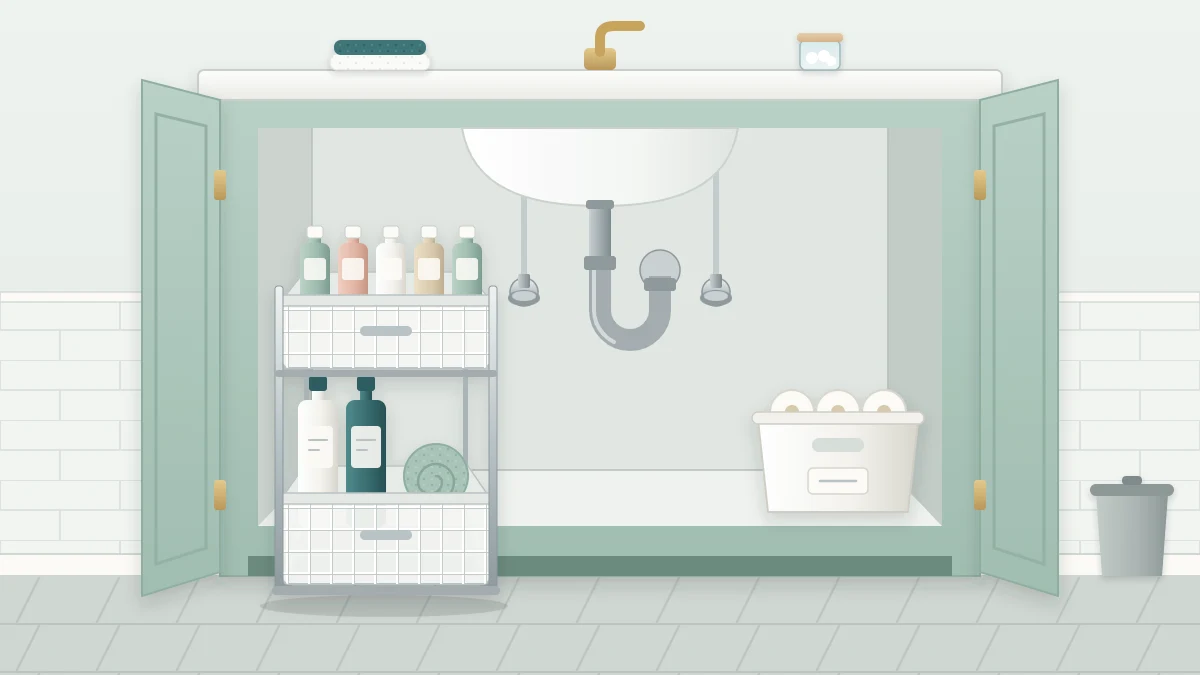
The back half of a sink cabinet is where things go to be forgotten. It is low, dark and behind whatever was put in last. Under-sink pull-out organizers solve that by bringing the back of the cabinet to you, either on a sliding frame, in a drawer or on a rotating base.
There are several types, and they are not interchangeable. This guide describes each by type, with what it suits and what to check before buying, so you can match one to the cabinet you actually have.
The main types
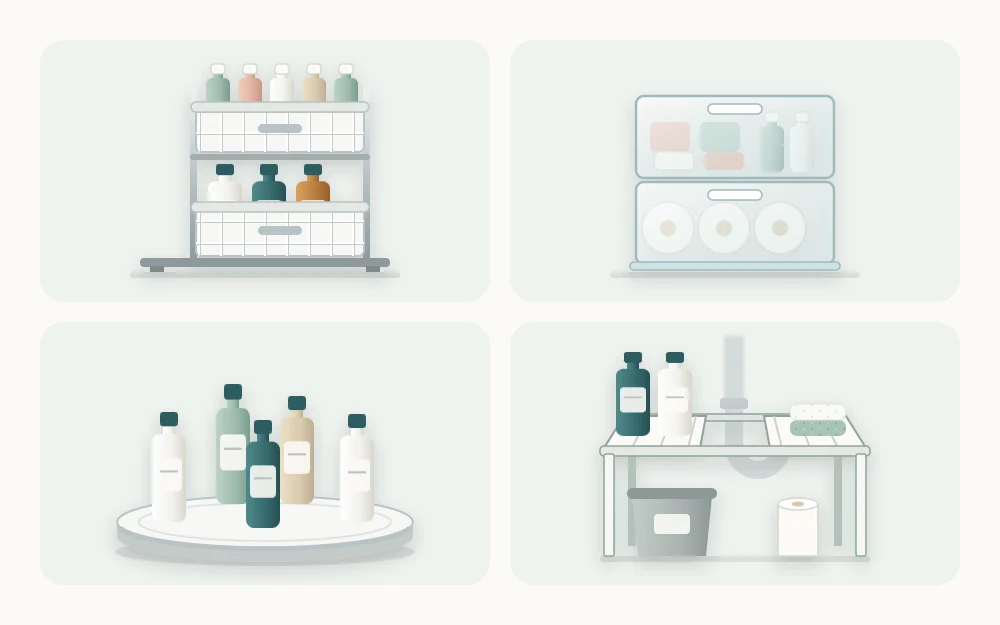
Sliding two-tier baskets
Two baskets ride on runners in a base frame, one above the other, and each slides forward on its own. The unit is usually narrow, so it fits beside the drain, and it uses the full height of the cabinet. It suits mixed categories of medium-sized items. The upper basket has limited headroom, so tall bottles go on the lower tier.
Stackable clear drawers
These are individual drawers in their own shells that stack two or three high. Each one closes, which keeps small categories contained and off the cabinet floor, and clear fronts let you see what is inside. They suit small and medium items such as backups, travel sizes and spare sponges. Tall bottles generally do not fit.
A handled bin used as a drawer
The simplest pull-out is an open bin with a handle on the front. It sits on the cabinet floor and you slide it out by hand. With no moving parts, it fits almost anywhere and costs little. It suits a single category that you take out all at once.
A turntable
A turntable, sometimes called a lazy Susan, does not pull out at all; it rotates so that bottles at the back come to the front. It suits upright bottles of similar height. A round shape leaves the cabinet corners unused, and it needs a clear circle to turn in, which the drain or a hinge can interrupt.
An expandable shelf with removable panels
This is a shelf on legs that spans the cabinet and adjusts in width. Individual panels lift out so the drain can pass through the gap. It creates a second level across the whole cabinet and suits bins above and below. It is fixed in place, so pair it with bins that slide.
A door-mounted rack
A shallow rack on the inside of the cabinet door holds slim, light items and swings out with the door. It suits small things you want quick access to. It needs clearance behind the closed door, and it must not collide with shelves or organizers inside.
The types compared
| Type | Best for | Watch out for |
|---|---|---|
| Sliding two-tier baskets | Mixed items in a narrow side bay | Clearance past the hinge and frame lip |
| Stackable clear drawers | Small categories kept closed | Limited height inside each drawer |
| Handled bin | One category lifted out whole | Items buried if overfilled |
| Turntable | Upright bottles of similar height | Unused corners; needs room to turn |
| Expandable shelf | A second level around the drain | Leg positions and pipe location |
| Door-mounted rack | Slim, light, frequently used items | Collision with contents when the door closes |
How to choose
Measure first. The full method for the cabinet is in the guide to under-sink organization; for a pull-out, these checks matter most.
- Measure the clear opening. A cabinet is often wider inside than its doorway. Measure between the hinges and inside any frame lip, because that is the width a sliding unit has to pass through.
- Measure beside the pipes. Note the clear width either side of the drain, the height available and the depth to the back wall or valves.
- Check the path of travel. A pull-out must clear the open door, the hinge and the cabinet frame lip along its whole travel. A lip at the bottom of the frame can stop a basket that would otherwise fit.
- Prefer visible contents. Open baskets, mesh and clear fronts show what is inside without pulling everything out.
- Choose wipeable materials. Drips happen under a sink, so plastic and coated metal are practical choices. Follow the maker’s care instructions.
Compare your measurements with the product’s stated dimensions, including the space it needs when fully extended.
Installation, in general terms
Freestanding units need nothing: you set them on the cabinet floor and they stay by their own weight. A non-slip mat underneath helps a light unit stay put when a basket is pulled.
Units that screw or stick to the cabinet floor follow their own instructions, including any stated load rating. Check where screws would go before committing, and if you rent, check the lease before fixing anything to the cabinet. Door-mounted racks follow the same rule.
Good to know
Do not attach anything to pipes, supply lines or valves, and do not rest an organizer against them. Position every unit so the shut-off valves remain reachable.
When a simple bin beats a mechanism
Sliding hardware earns its place in a deep cabinet that you open often. It is less useful in other cases. A plain handled bin is often the better choice when the cabinet is shallow, when the frame lip or hinge blocks a slide, when the bay beside the drain is an odd width or when the contents are one category that you carry elsewhere anyway.
Bins also adapt. If your needs change, a bin moves to another shelf, while a fixed sliding frame fits only the space it was bought for. A vanity with shelves and no drain in the way may not need pull-outs at all; the guide to vanity cabinet organization covers that layout.
How to group contents by tier
A two-level organizer works best when each level has a clear job.
- Lower tier: heavier and taller bottles, bulk backups and anything that might drip. Weight low keeps the unit steady when it slides.
- Upper tier: lighter, shorter and more frequently used items, where they are easiest to see and reach.
- One category per basket or drawer, where space allows, so each can be pulled out for a single purpose.
Cleaning supplies stay in their original labeled containers and get a basket or bin of their own, separate from toiletries. The guide to storing cleaning supplies under the bathroom sink explains how to set that up, including in homes with children.
Tip
After loading a pull-out, slide each tier fully out and back a few times. Anything that tips, catches on the frame or blocks the tier above needs a different spot.
Frequently asked questions
Do pull-out organizers fit around the pipes under a sink?
Many are narrow enough to stand in the space beside the drain, and expandable shelves have removable panels that leave a gap for it. Measure the clear width on each side of the pipes and the door opening, and compare those figures with the product's stated dimensions before buying.
Do under-sink pull-out organizers need to be screwed down?
Not always. Freestanding units simply stand on the cabinet floor. Others are designed to be screwed or stuck down so the frame stays put when a basket slides; those should be installed as their own instructions describe. Nothing should ever be fixed to pipes, supply lines or valves.
Is a turntable or a sliding basket better under the sink?
A turntable suits a group of upright bottles of similar height in a space with room to rotate. A sliding basket suits mixed items in a narrow, deep bay beside the drain. Where neither fits because of a hinge, a frame lip or an odd width, a plain handled bin is often the practical answer.