Bathroom Zones: Organizing by Daily Use
How to divide a bathroom into zones so each category is stored where it is used, with three reach levels, a table of typical zones and a simple way to map your own routine.
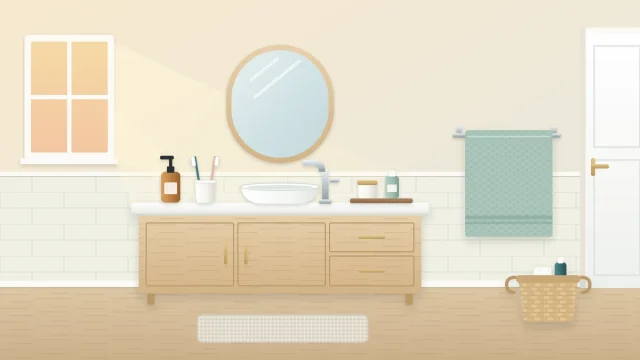
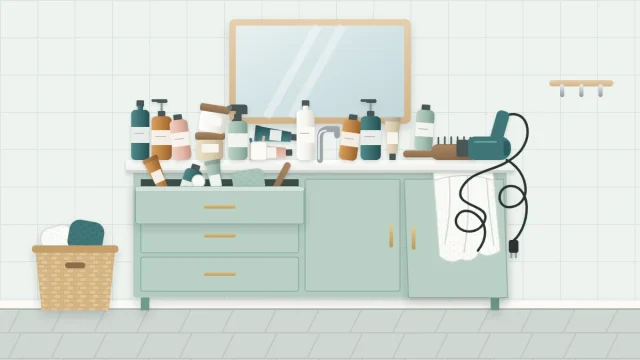
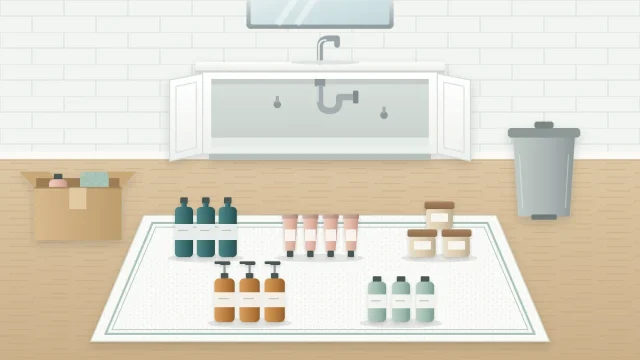
A bathroom can be fully put away and still be awkward to use. The toothpaste is in a cabinet across the room, the hairbrush is under a stack of backups, and the spare toilet paper is somewhere nobody can find at the wrong moment. Bathroom zones fix that by deciding where things go according to where and how often they are used.
The idea has two parts: store each category at the point of use, and give the easiest-to-reach space to whatever you use every day.
The idea behind zoning
Most bathrooms are organized by where things happen to fit. A tall bottle goes where there is height, a small jar goes where there is a gap. Zoning reverses that. You decide first where an activity happens, then store what it needs within arm’s reach of that spot.
The second part is frequency. Two items from the same category do not always belong together: the face wash used twice a day and the mask used twice a month have different claims on the best space.
Three reach levels
Sort storage by how easy it is to reach, then match it to how often things are used.
- Prime space is what you reach without bending, stretching or moving anything: the counter edge, the top drawer and the eye-level shelf of the mirror cabinet. It belongs to daily items.
- Secondary space takes one extra movement: lower drawers and the front of the vanity cabinet. It suits things used about once a week.
- Deep storage is the back of the cabinet, high shelves or a closet outside the bathroom. It holds backups and occasional items.
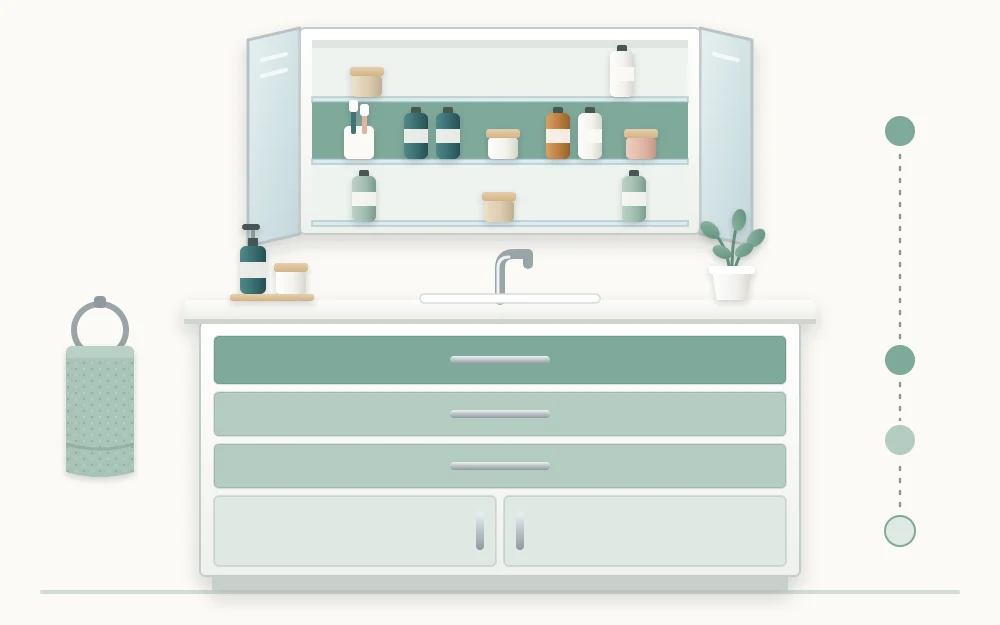
Prime space is small in almost every bathroom, which is why it fills up with the wrong things. Anything in it that you do not use daily is taking the place of something you do.
Typical zones in a bathroom
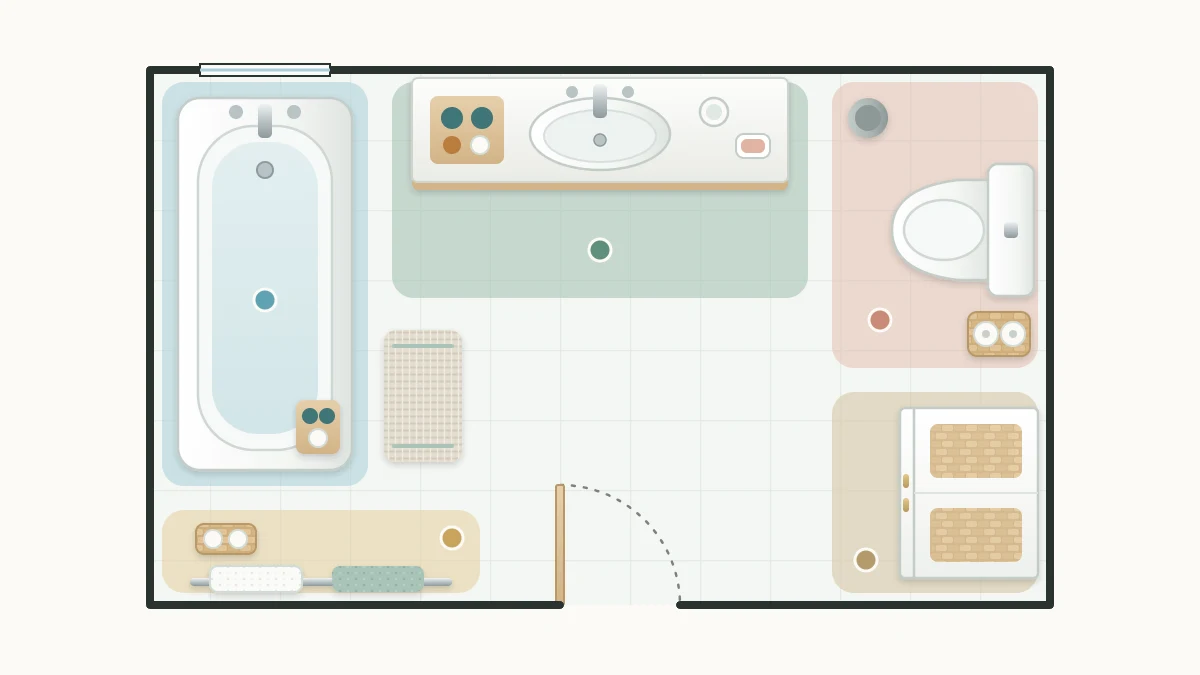
Your zones depend on your room and routine, but these seven cover most households.
| Zone | What lives there | Typical storage spot |
|---|---|---|
| Sink | Dental care, face and hand items | Mirror cabinet, top drawer, a small counter tray |
| Grooming | Hair, shaving, makeup | Vanity drawers near the mirror |
| Shower and bath | What is used in the water | Shower shelf or caddy |
| Toilet | Paper, a brush, a small bin | Beside or behind the toilet |
| Linen | Towels and washcloths | Shelves, a tall cabinet or a nearby closet |
| Cleaning | Cleaning supplies and cloths | Under-sink cabinet or a high shelf |
| Backup stock | Unopened spares | Back of the cabinet or outside the bathroom |
A few notes on these. The sink zone is the one most likely to spill onto the counter; the guide to bathroom countertop organization covers what earns a place there. In the grooming zone, anything with a cord is stored unplugged and away from the sink, tub and shower, and heat tools go back only after they have cooled completely as their manual describes.
Good to know
Cleaning supplies stay in their original labeled containers. In homes with children, place the cleaning zone up high or in a cabinet with a child safety lock or latch. A latch is an extra layer, not a substitute for keeping products out of reach.
How to map your own routine
You do not need to guess at your zones. Your existing habits will show you.
- Walk through a normal morning in the bathroom, step by step, and note each thing you pick up and where your hand reaches for it.
- Do the same for an evening.
- List the items you touched. These are your daily items, and they get prime space.
- Note where you were standing for each one. That spot is the item’s zone.
- Mark every reach that was awkward: a bend, a stretch, a second drawer opened. Those are the homes to change first.
Things you did not touch in either walk-through are weekly or occasional items. Move them to secondary space or deep storage, even if they have always lived on the counter.
Tip
Notice where items pile up on their own. A product that always ends up on the tub edge is telling you where its zone is. Give it a proper home there.
Zones inside drawers and cabinets
Zoning also works at a smaller scale. Within a single drawer, the front is easier to reach than the back, so daily items sit at the front and the rest behind. Within a cabinet, the front edge of a shelf is secondary space and the back is deep storage.
Dividers make these small zones hold their shape. The guide to bathroom drawer organization explains how to lay out a drawer once you know what goes in it.
Zones in a shared bathroom
When several people use one bathroom, the shared zones stay shared: one linen zone, one cleaning zone, one stock of backups. Inside the sink and grooming zones, each person gets a defined section of their own, such as one drawer, one shelf of the mirror cabinet or one bin.
Personal sections remove most arguments about whose things are where, and they make it obvious who has outgrown their space. The guide to organizing a shared bathroom vanity goes into how to divide the space fairly.
Why zones make tidying nearly automatic
Clutter on a bathroom counter is often a distance problem. If putting something away means crossing the room, opening a cabinet and moving two other things, it stays out. When the home is right where the item is used, putting it back takes about the same effort as putting it down.
That is the test of a good zone. If an item keeps wandering, its home is probably in the wrong place or too hard to reach. Move the home closer to where the item is actually used, and check again after a week or two.
Routines change, and zones should follow. A new job, a new household member or a different morning schedule is a good reason to walk through the routine again and adjust.
Frequently asked questions
What are bathroom zones?
Zones are areas of the bathroom assigned to one activity, such as the sink, grooming, the shower, the toilet, linens, cleaning and backup stock. Everything needed for an activity is stored within reach of where it happens, so items are close at hand when needed and quick to put back afterward.
What should go in the easiest-to-reach bathroom storage?
Only the things you use every day. The counter edge, the top drawer and the eye-level shelf of the mirror cabinet are the most convenient spots, and there is not much of that space. Weekly items move to lower drawers or the cabinet front, and backups go to the back or outside the room.
How do zones work when several people share a bathroom?
Keep towels, cleaning supplies and backups as shared zones, and give each person a defined section inside the sink and grooming zones, such as a drawer, a shelf or a bin. Everyone then knows where their own things go without needing a separate set of storage for each person.